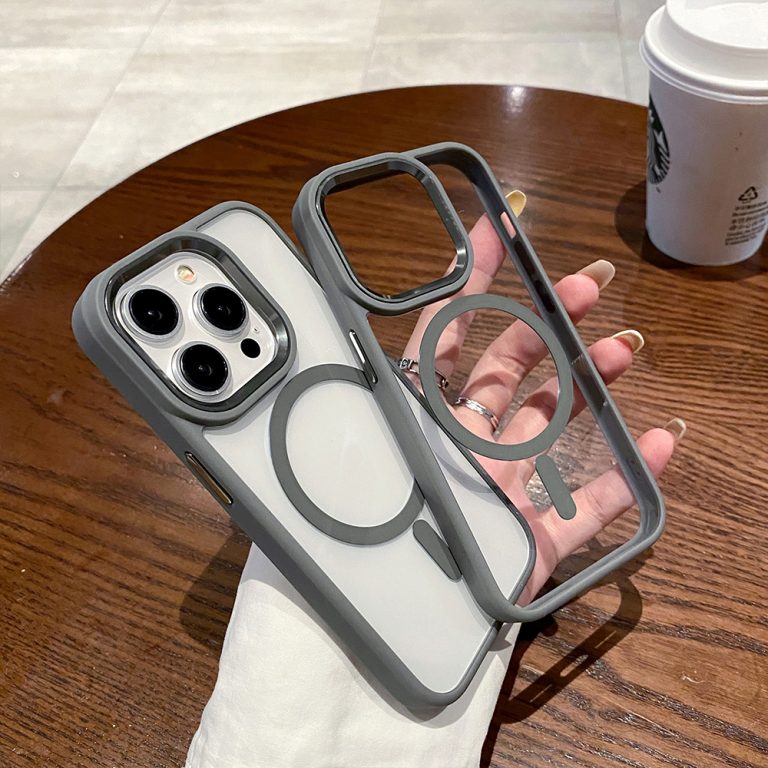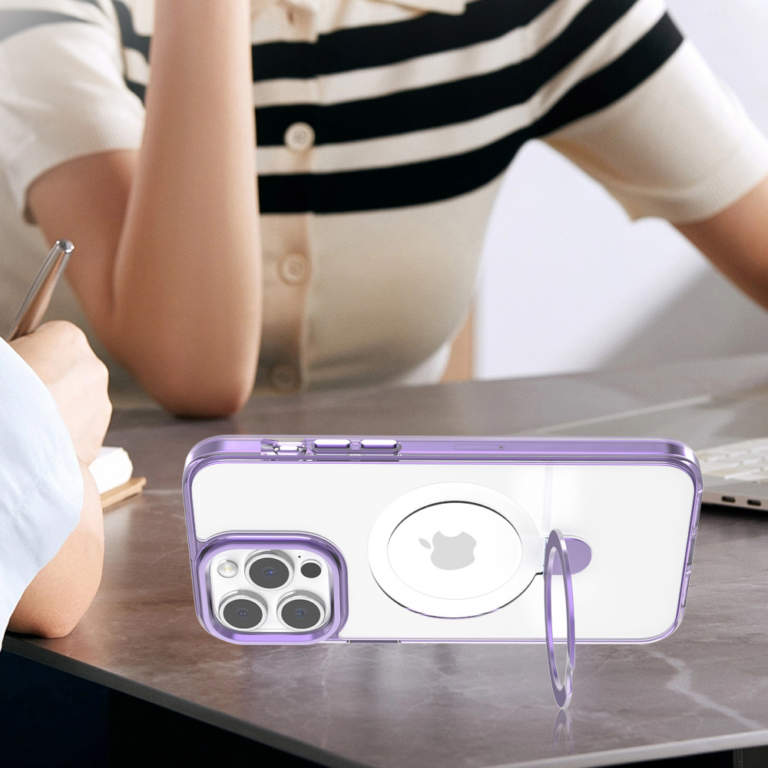
Start with what your clear case has to promise shoppers, then pick the build whose finished sample keeps that promise. Flexible, rigid, and hybrid are names for how a case is built. None of them wins for every assortment, and none of them guarantees clarity, protection, or a clean print.

So before you compare construction types, write the promise in one sentence and rank the trade-off that matters most. Then shortlist candidates and judge each one in hand, with its exact material and decoration method confirmed by the supplier.
Choose by the Product Promise, Not the Material Label
The right clear phone case construction is the one that delivers your top-ranked priority on a real sample. Name that priority first, because it decides which candidates make the shortlist.
Here are a few illustrative promises a wholesale buyer might set: “a slim everyday case that feels soft in the hand,” “a structured case that keeps its shape on the shelf and on the phone,” or “a clear base for printed artwork.” Each one puts a different trade-off first: handling, structure, or decoration. Rank them. If two priorities seem equal, choose the one that would cause returns or complaints if it failed. That one goes first.
Next, use the ranking as your choice path. If handling or structure comes first, request a sample of each construction your supplier offers for the target device. Then judge every sample against the ranked promise, not against its label. If decoration is the core of the offer, the decoration process and the exact material set the shortlist first. The shell type comes second, because print setup can depend on the specific resin.
The label alone will not settle the choice. A “flexible” or “hybrid” tag tells you how a case is put together. It does not tell you how one supplier’s finished case will look, feel, or hold up. Your choice should come from a sample that matches the production spec.
How Flexible, Rigid, and Hybrid Builds Differ
The three builds differ in how the shell is made. They do not come with fixed performance levels. A flexible case uses a bendable shell, often a TPU (thermoplastic polyurethane). A rigid case uses a stiff shell that does not bend much by hand. A hybrid case pairs a stiffer part with a more flexible part, such as a firm back panel with flexible edges.
These build differences show up in handling and structure in ways you can check on a sample. With a flexible build, see how much the shell bends when you put it on and take it off. Check whether it sits flat on the phone afterward. With a rigid build, check how the shell grips the phone and whether installing it takes force at the corners. With a hybrid, find where the two materials meet. Then ask the supplier which material each part uses, since a hybrid quote can hide two separate specs.

Inside one build type, results still vary with the resin grade and the case design. Two flexible samples from different suppliers can handle quite differently. Treat each supplier’s construction details as a description of that candidate only. Our phone case materials guide covers how material choice fits into an assortment’s positioning, which can help you decide which builds are worth sampling.
Connect Protection Design and Decoration to the Actual Build
Protection and decoration depend on the specific case design and material. The construction name does not decide them. Treat both as features to confirm on the candidate, not as promises that come with a flexible, rigid, or hybrid label.
On protection design, look at the features the candidate actually has: how high the edges rise around the screen, how the corners are shaped, and how the case frames the camera. These are design choices. A supplier can build them into any construction, or leave them out. Compare them on the sample, and do not assume one build type includes them by default.
Decoration needs a closer look at the material, because the right print setup can change with the resin. The printing setup guidance for Covestro TPU describes ink-jet and pad printing as effective methods for its TPU. It also recommends adjusting the ink solvent to suit TPU for both. The same guide covers hot stamping. It says Covestro’s TPU cannot be laser printed unless the material is modified first.
That guidance applies to Covestro’s TPU parts. It is not a rule for every TPU or every case surface. Use it to frame your questions. Ask the supplier or decorator which TPU grade the case uses, which decoration method they plan to use, and how the ink is set up for that material. If your artwork plan depends on laser marking, raise it early. The material may need to be specified for that process before production.
Check the Candidate Sample and Supplier Specification
Before you shortlist a wholesale clear case, confirm the exact build and material, then judge decoration on a sample that matches production. Run these checks in order:
- Get the exact construction in writing. Ask whether the case is flexible, rigid, or hybrid. For a hybrid, ask which material goes in each part.
- Request the specific resin grade, not just “TPU.” The documented differences between TPU grades show why. Lubrizol lists ESTANE ETE 50DT3 NAT 065 as a 50D polyether grade with low-temperature flexibility, high transparency, and UV stability. It lists PEARLTHANE CLEAR 15N70 as a 72A grade with low hardness and high elasticity. Ask for the datasheet of the grade in your case.
- Check that the sample matches production. Confirm the sample uses the same grade and build as the production spec. Then compare it with your ranked product promise, not with a rendering. Our bulk clear-case checks cover what else retail buyers should review before ordering.
- Test the planned decoration on that sample. Have the decorator print your real artwork with the planned method. Ask what adhesion check they use for this material. This practical guide on improving pad-print ink adhesion can help you talk through surface checks with them.
- Record what the supplier confirms. Write down the grade, build, and decoration setup the supplier commits to. Then use manufacturing quality checks to hold production to that spec.
If you are still building your brief, it helps to prepare for case sampling before you request candidates. When you sample with us, include your ranked promise and decoration method in your sample inquiry to our team. That way we can match the build and material to what you need to test.
FAQs
What does a Shore hardness number on a TPU datasheet tell me?
It gives the hardness of the resin as a number plus a scale letter, such as A or D. The D scale is used for harder materials than the A scale, so compare numbers only within the same scale. The reading describes the raw material. A finished case’s feel also depends on its design, so judge handling on the sample itself.
What does “hybrid” usually mean on a supplier quote?
A hybrid case combines a stiffer part with a more flexible part in one case. Suppliers use the term differently, so ask which parts are which material and request the grade for each one. That gives you one complete spec per material, not one vague label for the whole case.
Does a “UV stability” note on a resin datasheet mean the clear case won’t yellow?
No. A datasheet note like that describes the resin grade. It does not show how a finished case will look after months of use. If clarity over time is part of your product promise, ask the supplier what evidence they have for the finished case itself, and do not count on the resin description alone.