Add MagSafe to a clear phone case line only when you can name the buyers who need magnetic attachment to chargers and accessories. You also need evidence behind every compatibility and quality claim for the exact case you plan to sell. The feature name doesn’t prove demand, so treat clear MagSafe cases as a separate product with their own validation work.

If the use case is real but your evidence or supplier terms only cover part of the range, a narrow test may fit. If you can’t yet name the buyer, the models, or the terms, wait on the decision.
When a Clear MagSafe SKU Earns a Place
A separate SKU earns its place only when buyers actually require magnetic attachment for chargers, mounts, or wallets that your standard clear case cannot serve. Confirm that need directly through verified retail orders, account requests, or wholesale buyer interviews before committing to production. Supplier availability alone does not indicate market demand.
Then work in order. First, define the use case. Second, confirm that the proposed case can back each claim you plan to print or list. Third, review the actual model coverage and supplier terms. A failed step changes the answer. With no clear use case, stay with your standard clear line. If evidence is missing, cut back the claims or the models. If the terms are weak, test small or wait. Treat a limited test as an option only when you can support its exact scope and terms, and don’t plan around it succeeding.

What the Magnetic Option Adds
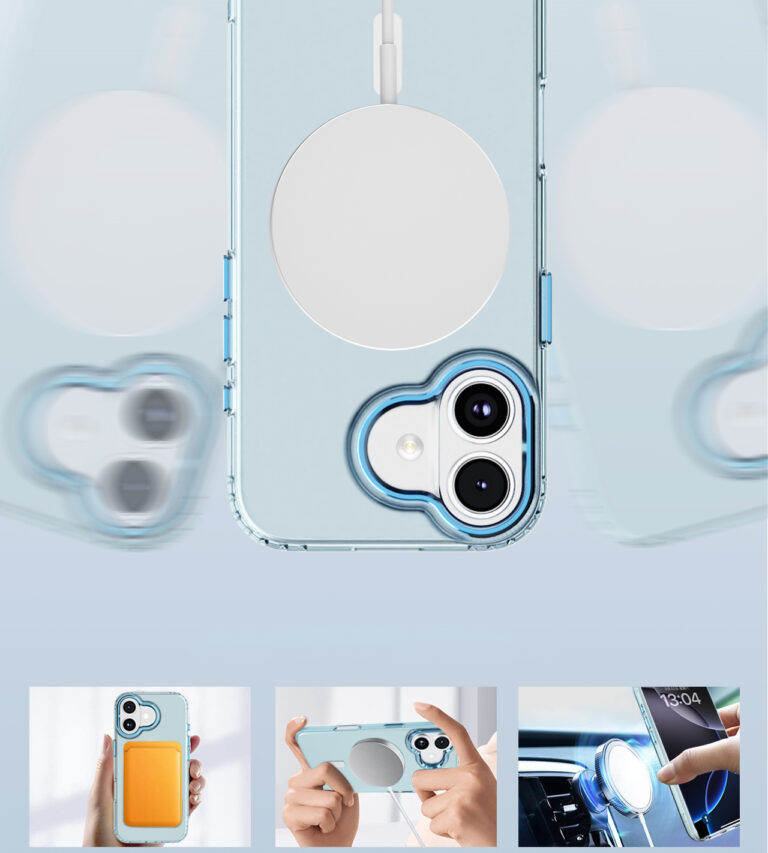
What the magnetic version adds is attachment. Business Insider’s 2024 iPhone 15 clear-case review, an affiliate-supported shopping guide, notes that shoppers can find clear cases with and without MagSafe. The MagSafe versions let the phone attach magnetically to MagSafe chargers and accessories.
That gives you a simple way to frame the split in your line. A standard clear case sells on looks and protection. A magnetic clear case does one more job: it holds the phone on a magnetic charger or accessory. If your buyers don’t use those accessories, the magnetic version adds SKU count and validation work without giving them anything new.
Keep the example in scope. It’s consumer shopping advice for one phone generation. It doesn’t show that wholesale accounts want the feature, and it doesn’t show that a case built for other models will work the same way. Use it to describe the use case you plan to test. Then collect your own buyer evidence before it shapes the assortment.
Define Compatibility Before Making Claims
Compatibility isn’t one claim. It’s a set of claims, one for each phone and accessory pairing you plan to support.
The terms help explain why. In its 2023 Qi v2.0 announcement, the Wireless Power Consortium describes two profiles: magnetic MPP and nonmagnetic EPP. The Magnetic Power Profile is based on MagSafe technology contributed to WPC. The Extended Power Profile does not include magnets. The same release says Qi2’s magnetic attachment helps align the phone and charger, so users don’t have to adjust the position by hand. That explains why magnets matter for charging alignment. Which phones are on sale now, and whether a third-party case keeps that alignment working, are separate questions. Current documentation and results from your own case have to answer them.
Build a pairing record before any copy goes on packaging or listings:
- Name each pairing. Record the phone model and the specific accessory type, such as a charger, mount, or wallet.
- Write the exact public claim. Keep magnetic attachment, alignment, and charging as three separate claims. Evidence for one does not cover the other two.
- Match each claim to evidence. Note the source, its date or version, and the document or sample result for the proposed case that supports that exact wording.
- Cut what you can’t support. If a pairing has no current documentation or case-specific evidence, leave it off as established compatibility, or reword the claim to what you can show.
When you’re done, the record tells you which models can carry a magnetic claim and which should ship as standard clear cases or wait.
Treat Clear-Case Quality as a Separate Gate
Adding magnets doesn’t answer any clear-case quality question. Each quality claim you plan to use needs its own evidence for the proposed case before it helps justify the launch.
- Material: Name the material only as the supplier’s specification states it for this exact case. A material category alone doesn’t prove anti-yellowing performance.
- Yellowing: Ask for documentation or results tied to this case before you say it resists yellowing. Results from a different product don’t transfer.
- UV resistance: If you plan a UV claim, get the test method and results for the proposed case. Clear case UV resistance testing on another build doesn’t count.
- Scratch resistance: Tie any coating or surface claim to the supplier’s documentation for this build, and check whether it covers the magnetic version or only the standard one.
- Camera protection: Camera protection design is specific to each model. Compare samples for every model in the range against the stated design before you claim protection.
If a claim lacks support, drop it from the sales story. If the launch only makes sense with that claim, the gap is a reason to wait.
Set Launch Scope From Actual Assortment Terms
Launch scope should come from real numbers in your quotes, not from assumptions about the category. Put the proposed model coverage next to current MOQ, customization options, packaging, and pricing terms for each model. Compare that actual assortment against your pairing record and quality evidence.
A broad launch makes sense only when both line up across the range: each model has supported claims, and the terms for each model work for your business. A narrow test fits when the use case is credible but evidence or terms only cover some models. Limit the test to those models and the claims you can support, and confirm that the test quantity and terms are workable on their own. A test gives you sales data. It doesn’t guarantee a result.
Defer the rollout decision if compatibility evidence or commercial inputs are still unknown. Don’t fill the gap with a guessed launch size or margin. For clear phone case wholesale planning, ask each supplier for terms in writing for the magnetic and standard versions separately. If you’re requesting quotes through our wholesale phone case store, we can give you model coverage, MOQ, customization, and packaging details per variant so you can compare them side by side. Clear MagSafe case manufacturing terms can differ from your standard line, so don’t assume they match.
FAQs
Is Qi2 the same thing as MagSafe?
Not exactly. In WPC’s 2023 description, Qi v2.0 has two profiles. The Magnetic Power Profile is based on MagSafe technology contributed to WPC, and the Extended Power Profile has no magnets. When you write product copy, use the term that matches what your evidence covers. Don’t treat the names as interchangeable.
Do custom logo clear phone cases need their own sample checks?
Treat the decorated version as the product you’re approving. Ask for samples with the logo applied and run your attachment and fit checks on that version, not only on a blank case. Confirm logo placement and method with the supplier for both the magnetic and standard variants.
Can clear MagSafe cases share packaging with the standard clear line?
They can share a design, but the claims must stay separate. Any magnetic or charging claim printed on shared packaging would also appear on the standard case, which doesn’t have the feature. Use a variant-specific insert, sticker, or panel so each box carries only the claims its case supports.
What if a retail buyer asks for a model you haven’t validated?
Offer the standard clear case for that model, or hold the magnetic version until you have evidence for it. Adding the model to your pairing record first keeps the listing honest and gives you a clear path to add it later.