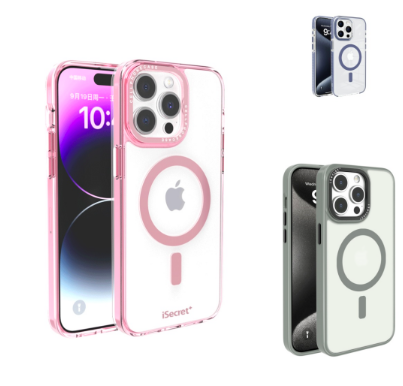

In today’s highly competitive mobile accessories market, the magnetic phone case has become one of the most commercially attractive categories for distributors, retailers, importers, and private label brands. As smartphones increasingly support magnetic charging and accessory ecosystems, professional buyers are no longer evaluating cases based only on appearance or basic protection. They are looking for products that combine functional reliability, material consistency, accessory compatibility, and strong branding potential.
For B2B buyers, sourcing a magnetic phone case is not simply a matter of following consumer trends. It is a strategic product decision that influences retail performance, return rates, customer satisfaction, and long-term brand value. End users expect convenience, protection, and compatibility, while B2B buyers must also consider production stability, customization flexibility, and commercial scalability.
A well-developed magnetic phone case can create value across multiple channels. It can be positioned as a premium accessory, bundled with magnetic wallets and chargers, or customized for OEM and private label programs. For buyers searching for a dependable magnetic phone case manufacturer, the real priority is not just visual appeal, but whether the product can support long-term commercial performance.
However, not every magnetic case is built to the same standard. Weak magnetic performance, inconsistent charging compatibility, poor materials, or loose model fit can quickly lead to negative reviews and increased after-sales costs. This is why professional buyers tend to evaluate magnetic phone cases through a broader commercial lens. They look beyond the surface and focus on the features that matter most in real-world retail and wholesale environments.
1. Magnetic Ring Engineering and Alignment Performance

For B2B buyers, the performance of a magnetic phone case starts with the engineering quality of its magnetic ring system. This is not simply about whether the case can attach to a charger or accessory. Professional buyers are usually more concerned with how precisely the magnetic ring is structured, how stable the magnetic alignment remains in repeated daily use, and whether the magnetic architecture supports a consistent user experience across different accessory ecosystems.
A well-designed magnetic ring should deliver accurate magnetic positioning, allowing the phone to align quickly and correctly with compatible wireless chargers, magnetic wallets, car mounts, battery packs, and desk stands. Poor alignment can result in charging inefficiency, weak attachment, unstable mounting, or accessory slippage. From a B2B standpoint, these issues are not minor inconveniences. They directly affect sell-through performance, product reviews, return rates, and brand credibility.
More experienced buyers also evaluate the uniformity of magnetic force distribution across the ring rather than focusing only on general holding strength. A case with uneven magnetic layout may initially feel strong, yet still perform poorly in real-world use because the device shifts during charging or detaches under vibration, movement, or repeated handling. This is especially important for products intended for automotive use, where mount stability is a key performance requirement.
In addition, the magnetic ring must be integrated into the case structure with a high level of manufacturing precision. Factors such as ring positioning tolerance, embedded depth, material layering, and structural bonding can all influence final performance. If the magnetic ring is not accurately placed within the case, the user may experience reduced charging efficiency or inconsistent accessory compatibility. For B2B buyers sourcing under private label programs, this level of precision is critical because even small engineering inconsistencies can become large-scale after-sales problems once production volumes increase.
Another important consideration is magnetic performance retention over time. Buyers generally prefer suppliers that can demonstrate stable performance after repeated attachment cycles, routine handling, and long-term use. A magnetic phone case should maintain dependable connection strength without noticeable degradation in daily commercial use. This is particularly relevant for retailers and distributors targeting mid-to-high-end market segments, where end users expect both convenience and durability.
Ultimately, for B2B procurement teams, the magnetic ring is not just a feature add-on. It is the core functional component that determines whether a magnetic phone case can meet modern accessory expectations. Suppliers that can offer reliable magnetic engineering, precise ring placement, and stable compatibility across multiple applications are typically in a stronger position to support long-term wholesale and private label business.
2. Wireless Charging Compatibility
Wireless charging compatibility is another essential feature B2B buyers carefully evaluate when sourcing a magnetic phone case. In today’s market, end users expect a magnetic case to work smoothly with compatible wireless chargers without needing to remove the case. For professional buyers, this is not just a convenience feature. It is a baseline performance requirement.
A high-quality magnetic phone case should support stable charging alignment and efficient energy transfer. If the case interferes with charging speed, causes intermittent connection, or generates excessive heat due to poor structural design, it can quickly damage product reputation in retail channels. These issues often result in complaints that the case is inconvenient or unreliable, even if the external appearance is attractive.
Many B2B buyers therefore test products across different charging scenarios before placing volume orders. They may evaluate compatibility with official chargers, third-party charging pads, battery packs, and bundled accessories. Reliable performance also depends on compatibility with modern Qi wireless charging standards, especially when buyers plan to market the case alongside related accessories.
In competitive markets, dependable wireless charging support helps position a magnetic phone case as a more complete solution rather than a basic protective item. That added functionality can improve perceived value and justify stronger pricing.

3. Drop Protection and Daily Durability
Although magnetic functionality is a major selling point, protection remains one of the most important purchasing factors in the phone case category. B2B buyers want a magnetic phone case that adds functional convenience without compromising physical protection.
In most markets, consumers still expect a phone case to protect their devices from drops, impacts, scratches, and daily wear. Features such as reinforced corners, shock-absorbing inner layers, raised bezels around the screen and camera, and anti-scratch coatings can significantly improve the commercial appeal of a product. Buyers are often looking for the right balance between slim design and reliable impact resistance.
Durability also matters from a brand and operational perspective. Cases that crack, deform, discolor, or peel too quickly are more likely to generate returns and poor reviews. For importers, distributors, and private label brands, this creates unnecessary cost and weakens market confidence. A durable magnetic phone case supports better product lifespan and a more stable after-sales experience.
For B2B procurement teams, durability is not only about passing a drop test. It is about ensuring that the product continues to look and perform well after weeks or months of real-world use. Buyers comparing product quality may also refer to broader MIL-STD-810H impact testing standards when evaluating whether a case is suitable for premium or high-volume markets.

4. Material Quality and Surface Finish
Material quality plays a major role in how a magnetic phone case is perceived in the market. The choice of materials affects not only protection and comfort, but also the product’s visual appeal, tactile experience, and long-term consistency across production batches.
Common constructions include TPU, polycarbonate, silicone, hybrid structures, and leather-like finishes. Each option serves different market needs. Soft-touch materials may appeal to premium and lifestyle-focused brands, while transparent or minimalist hard-shell designs may perform better in mainstream retail channels. For B2B buyers, the key question is whether the selected material aligns with the intended price segment and customer expectations.
Beyond appearance, buyers also look for manufacturing consistency. Poor raw materials can lead to yellowing, odor, weak flexibility, surface scratches, coating failure, or inconsistent texture. Material durability can vary significantly depending on the base resin and coating system, especially when using thermoplastic polyurethane (TPU) material in flexible case structures.
A refined finish can also improve shelf presentation and online conversion. In crowded sales environments, a magnetic phone case with clean molding, uniform texture, and premium feel has a better chance of standing out.

5. Precise Fit and User-Friendly Design
Precise fit is a basic but critical requirement for any magnetic phone case. Even a product with strong magnets and attractive materials can fail in the market if it does not fit the phone model correctly.
B2B buyers typically expect highly accurate cutouts for cameras, ports, speakers, and side buttons. The case should also provide clean alignment around the device edges, allowing easy installation and removal without becoming too loose or too tight. Poor fit may affect button responsiveness, cable access, protection performance, and overall user experience.
In large-scale purchasing, small fit issues can become major problems. If a production batch has even a slight tooling deviation, the defect may affect thousands of units. That is why many buyers carefully review samples and production drawings before confirming mass orders.
Ergonomic details also matter. Grip comfort, button feedback, edge smoothness, thickness control, and overall handling feel can strongly influence consumer reviews. A magnetic phone case that is easy and comfortable to use has a stronger chance of succeeding across retail, e-commerce, and private label channels.
Table: Key Evaluation Criteria B2B Buyers Use When Sourcing a Magnetic Phone Case
| Evaluation Factor | What B2B Buyers Check | Why It Matters |
|---|---|---|
| Magnetic Ring Performance | Alignment accuracy, holding stability, force distribution | Affects charging efficiency and accessory attachment |
| Wireless Charging Compatibility | Charging consistency, heat control, alignment | Reduces complaints and improves usability |
| Protection Level | Drop resistance, raised edges, shock absorption | Supports customer satisfaction and lower returns |
| Material Quality | Texture, anti-yellowing, coating durability | Impacts perceived value and long-term performance |
| Fit Accuracy | Button response, cutouts, model precision | Prevents usability and compatibility issues |
| Customization Support | Logo, packaging, colors, MOQ flexibility | Helps private label buyers build brand value |
| Quality Control | Batch consistency, inspection process | Reduces large-order sourcing risk |

6. Attractive Design for Different Market Segments
B2B buyers do not source products only for technical performance. They also assess whether the product design is commercially suitable for their target audience. A magnetic phone case should offer a design language that fits the preferences of the intended market segment.
Different customer groups have different expectations. Some prefer slim and minimal styles, while others look for rugged construction, luxury finishes, transparent backs, or fashion-oriented colors. Business-focused buyers may want understated and practical designs, while online-first brands may prioritize trend-driven styles that perform well in visual marketing.
This is why design flexibility matters. Suppliers that can offer multiple looks within the same product category make it easier for buyers to test different audiences without rebuilding the entire product concept. This flexibility can support broader assortment planning and faster market response.
From a B2B perspective, strong design capability is not just a visual advantage. It is part of the product’s sales strategy.
7. Custom Branding and Private Label Support
For many B2B customers, the ability to customize is one of the main reasons for sourcing a magnetic phone case through a manufacturing partner rather than buying generic stock. Custom branding and private label support are therefore major commercial considerations.
Professional buyers often look for suppliers that can provide logo printing, embossed branding, custom packaging, color matching, barcode labels, inserts, and retail-ready presentation. Some buyers may also seek mold modifications or exclusive design elements that help differentiate their products from mass-market alternatives.
Strong OEM and private label phone case services add value because they help buyers build a more recognizable and defensible brand. In crowded markets, a generic case can easily be replaced by a similar product at a lower price. A customized magnetic phone case with strong branding gives buyers more control over pricing, positioning, and customer loyalty.
Packaging support also matters. Suppliers that can offer custom packaging for phone cases make it easier for distributors, importers, and retailers to create a more polished product presentation.
Flexibility in MOQ is equally important. Many developing brands want to validate a product concept before moving into large-scale orders. Suppliers that can support smaller branded runs often have an advantage in early-stage B2B partnerships.
8. Multi-Model Availability
A serious B2B buyer rarely looks for just one device model. Most want a magnetic phone case line that covers multiple smartphone generations and best-selling models. Broad model availability makes a product range more useful and commercially sustainable.
Retailers and distributors typically need support for current flagship devices as well as selected older models that still generate strong demand. This helps them serve a wider customer base and reduce dependence on a single SKU. It also makes it easier to launch coordinated collections across an entire product line.
From a sourcing standpoint, wide model coverage also reflects a supplier’s tooling capability and product development speed. Buyers often prefer factories that can respond quickly to new device launches and bring compatible case options to market without long delays.
In fast-moving accessories categories, timing matters. A magnetic phone case supplier that can keep up with new smartphone releases is usually more valuable to long-term B2B customers.
9. Reliable Quality Control and Production Consistency
Product quality must remain consistent from one batch to the next. For B2B buyers, this is one of the most important factors when selecting a magnetic phone case supplier.
Professional buyers often assess the factory’s quality management process in detail. They may ask about raw material inspection, in-line production checks, magnetic performance verification, fit testing, appearance inspection, and packaging review. A transparent phone case quality control process helps reduce the risk of defects reaching the market and supports a more stable business relationship.
Consistency is especially critical in OEM and private label programs. A color mismatch, weak magnetic ring placement, inaccurate molding, or packaging inconsistency can damage the buyer’s brand image. Even if the defect rate seems small, the commercial impact can be significant once the product reaches large retail or e-commerce channels.
A reliable supplier should be able to reproduce the same magnetic strength, surface finish, fit accuracy, and packaging quality across every order. That kind of repeatability gives B2B buyers greater confidence in scaling the business.
10. Packaging and Retail Readiness
Packaging is often underestimated in consumer discussions, but for B2B buyers it is a highly practical consideration. A magnetic phone case may need to be shelf-ready, e-commerce-ready, or distribution-ready depending on the channel.
Well-designed packaging protects the product during transport, improves presentation, and communicates key selling points clearly. Buyers may need packaging that includes brand elements, compatibility information, barcode placement, instructional text, and material claims. In some markets, interest in sustainable packaging practices is also becoming stronger.
For e-commerce sellers, packaging must protect the item through shipping while still supporting a clean and premium unboxing experience. For brick-and-mortar retail, visibility and display performance matter more. Suppliers that understand these differences can provide more commercial value than those offering only a standard package format.
Retail readiness is often what turns a product from a factory item into a market-ready solution.

Table: Why a Magnetic Phone Case Offers More Commercial Value Than a Standard Case
| Feature | Standard Phone Case | Magnetic Phone Case |
|---|---|---|
| Wireless Charging Ease | Moderate | High |
| Magnetic Accessory Support | No | Yes |
| B2B Bundling Potential | Limited | Strong |
| Premium Positioning | Moderate | High |
| Upsell Opportunity | Lower | Higher |
Conclusion
For B2B buyers, choosing the right magnetic phone case involves far more than selecting a product that follows market trends. The most successful products combine professional magnetic ring engineering, reliable wireless charging compatibility, durable protection, premium materials, precise fit, attractive design, and strong private label support. These are the features that influence not only product performance, but also retail conversion, customer satisfaction, and long-term brand credibility.
In a highly competitive market, a well-developed magnetic phone case can become a strong revenue driver for importers, distributors, wholesalers, and private label brands. Buyers that focus on structural reliability, production consistency, and market fit are better positioned to reduce risk and create long-term value.
If your business is looking for a supplier with stable manufacturing standards, flexible customization, and scalable support, working with an experienced wholesale phone case supplier can make a significant difference. For OEM, private label, or bulk sourcing projects, you can also request a quote to explore the right magnetic phone case solution for your market.
FAQ: Magnetic Phone Case Sourcing for B2B Buyers
What makes a magnetic phone case suitable for B2B wholesale?
A magnetic phone case is more suitable for B2B wholesale when it offers stable magnetic performance, reliable wireless charging compatibility, durable materials, accurate fit, and support for customization such as logo branding and packaging.
Do all magnetic phone cases support wireless charging?
No. Not all magnetic phone cases deliver the same charging performance. Some may interfere with charging alignment or reduce charging efficiency due to poor magnetic ring placement or structural design.
What materials are best for a magnetic phone case?
That depends on the market segment. TPU, PC, hybrid structures, and leather-like finishes are all common options. The best choice depends on the target price range, design preference, and durability expectations.
Can a magnetic phone case be customized for private label projects?
Yes. Many manufacturers offer private label options such as logo printing, custom colors, packaging design, inserts, and barcode labels for magnetic phone case projects.
How do B2B buyers evaluate magnetic ring quality?
They usually evaluate magnetic ring alignment, force distribution, attachment stability, compatibility with accessories, and long-term performance consistency across repeated use.