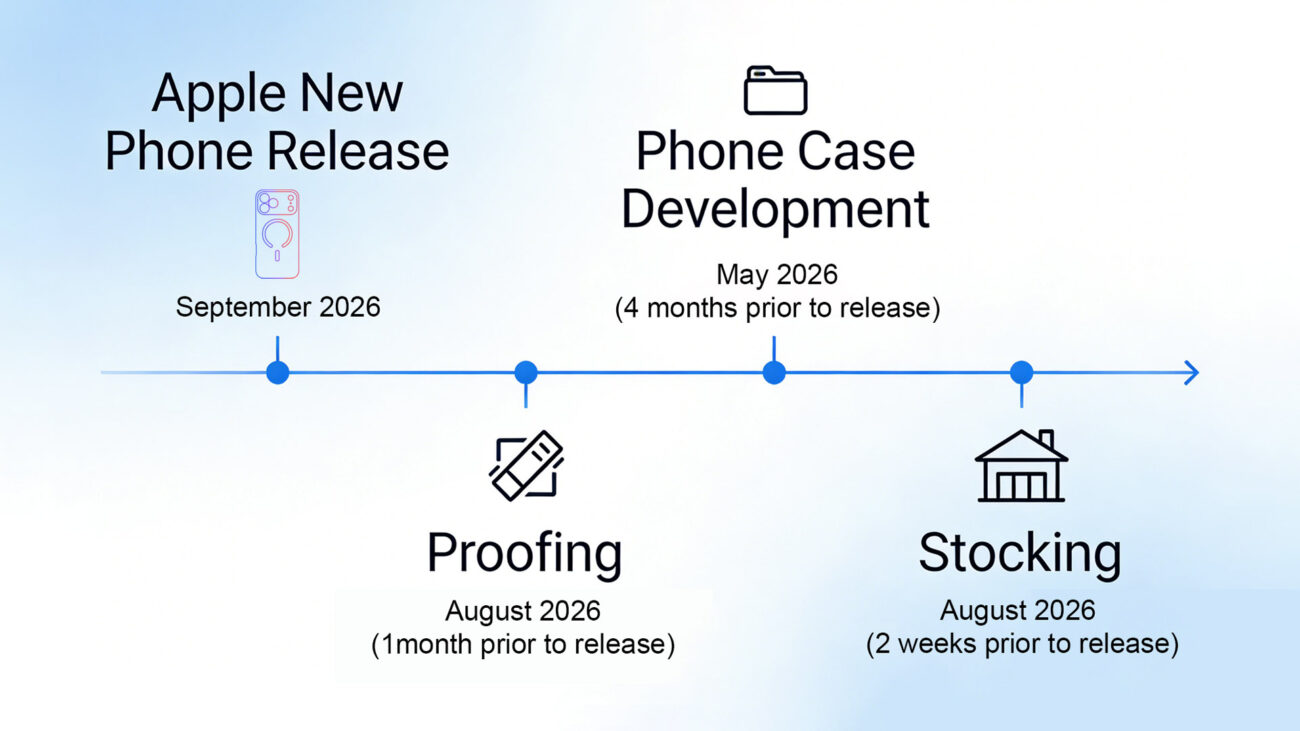
As Apple moves closer to its 2026 iPhone cycle, accessory brands, wholesalers, and private label sellers are already asking the same question: what should iPhone 18 case design look like, and how early should development begin? While Apple has not officially announced the iPhone 18 lineup, recent reports suggest that the iPhone 18 Pro models may keep a broadly similar overall structure to the current Pro generation while introducing a smaller Dynamic Island and other subtle refinements. At the same time, some reports indicate that Apple could adopt a split release schedule, with Pro models launching first and some non-Pro models arriving later. For B2B buyers, that would directly affect product development, tooling priorities, and launch planning.
For brands selling through e-commerce, retail, or distribution channels, this matters because small hardware changes often create major consequences for case design. A slightly different camera plateau, tighter button placement, a narrower screen cutout, or small frame changes can all require new mold checks and fit verification. That is why the iPhone 18 cycle should not be treated as just another rumor-driven news topic. It should be treated as a product development window.
Why iPhone 18 Case Design Is Already Worth Watching
The iPhone case market moves before the phone officially launches. Apple’s iPhone 17 launch timeline followed its familiar September schedule, with pre-orders beginning on September 12 and availability starting on September 19. For accessory brands, that is a reminder that first-wave products need to be prepared well before launch.
The broader market context also supports early planning. According to Counterpoint Research, global smartphone shipments grew 2% year over year in 2025, driven in part by stronger premium demand. For phone case manufacturers and brand buyers, that means premium launches like the next iPhone cycle still create meaningful opportunities for high-value accessories.
Because of that, iPhone 18 case development should begin with flexible planning, not last-minute reaction. Brands that prepare early typically have more room to refine fit, select materials carefully, and build a stronger launch collection. If your business is already planning its next Apple-focused accessory lineup, this is also the right moment to review your supplier strategy and product roadmap.
A Similar Overall Shape, but Not an Identical Opportunity
Recent reporting from MacRumors suggests that the iPhone 18 Pro lineup may remain broadly similar to the current Pro design direction, rather than introducing a fully new form factor. That is potentially good news for suppliers, because it may reduce the need for a total redesign across every accessory category.
However, similar does not mean interchangeable. Even when the overall silhouette stays close, accessory brands still need to reassess mold tolerances, edge fit, button response, and camera surround protection. In the phone case industry, a small dimensional adjustment can be the difference between a clean fit and a return-prone product.
For brands planning iPhone 18 launches, the smarter position is simple: expect continuity in the overall structure, but prepare for precision-level changes in the details.
Smaller Dynamic Island May Influence Front-Edge Design
One of the most discussed iPhone 18 rumors is a smaller Dynamic Island. Recent reports from MacRumors’ iPhone 18 Pro roundup suggest that Apple may move more Face ID components under the display, which could reduce the visible cutout size on at least some Pro models. Current reporting says the Dynamic Island on the iPhone 18 Pro could become roughly 35% narrower than the iPhone 17 Pro’s.
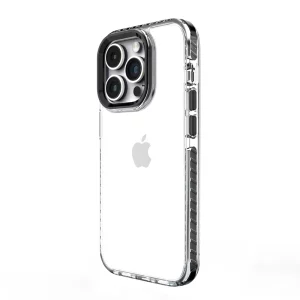
For case design, this does not mean the front lip suddenly becomes less important. But it does mean brands should rethink how the case frame visually interacts with the display area. On premium products such as clear magnetic cases, leather cases, and slim hybrid cases, the front edge should feel refined rather than bulky. If the display area looks cleaner and more compact, the case design should follow that direction.
This is especially relevant for brands targeting higher-end buyers. A more refined display appearance usually increases demand for cleaner, slimmer-looking case profiles, even when protection remains a priority. For brands building premium collections, this is also where design language matters just as much as protection performance.
Camera Protection Will Still Be a Core Selling Point
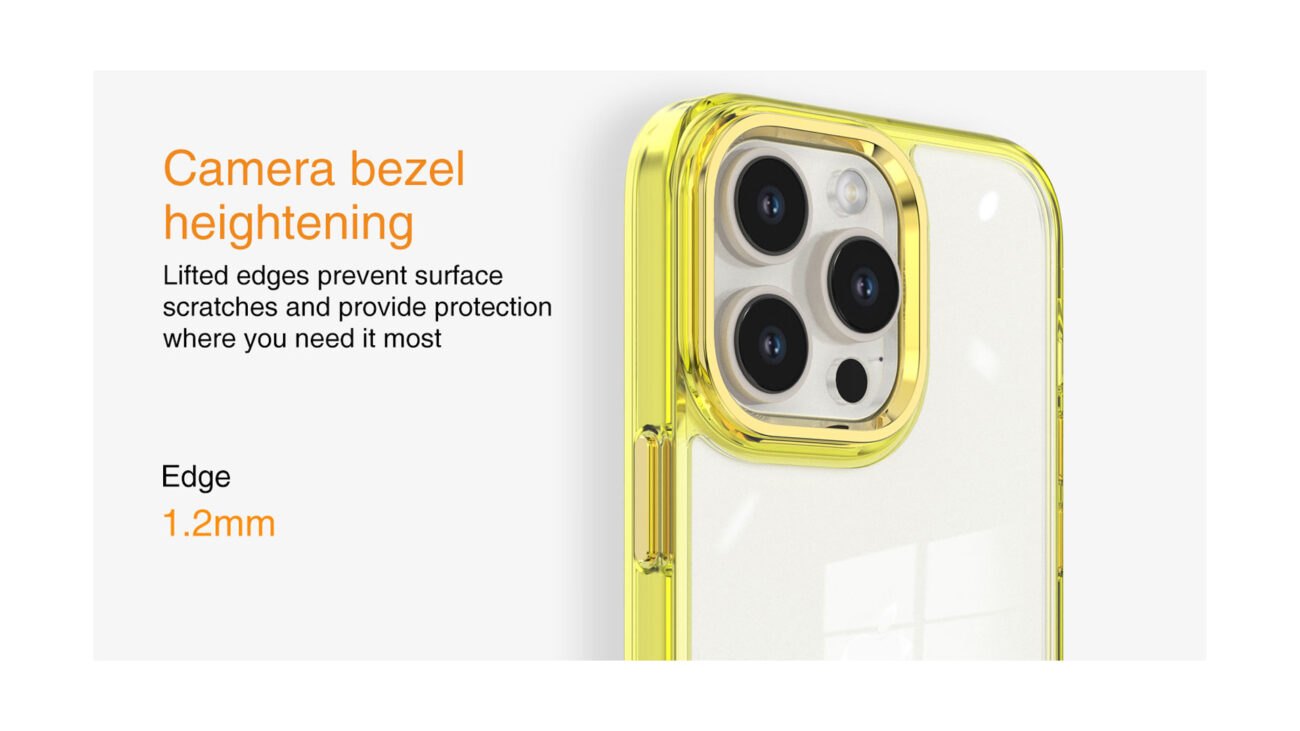
Even if the camera layout stays broadly familiar, camera-area protection will remain one of the most important case selling points. In Apple’s iPhone 17 Pro announcement, the company emphasized the advanced camera system and positioned the Pro series as a major performance and design upgrade. That reinforces how central camera functionality continues to be in Apple’s premium product story.
That means iPhone 18 case design in 2026 should still prioritize:
- Raised lens protection
- Stable camera-ring integration
- Scratch-resistant materials around the lens area
- Tight tolerance around multi-camera layouts
- Impact-absorbing corners without interfering with usability
For OEM and private label buyers, this is also an opportunity to differentiate. Metal camera rings, reinforced camera bezels, independent lens-frame details, and more refined camera-control-friendly openings can help a product stand out during launch season.
Materials Will Need to Balance Slimness, Grip, and Premium Feel
If the iPhone 18 Pro line continues Apple’s recent premium design language, case buyers will likely keep looking for products that combine clean appearance, reliable drop protection, and strong hand feel. Apple’s iPhone 17 Pro launch coverage described the device as a major redesign and positioned it as the company’s most powerful iPhone yet, while the latest generation continues to emphasize a premium build and refined hardware experience.
That makes the following material directions especially relevant for iPhone 18 case development:
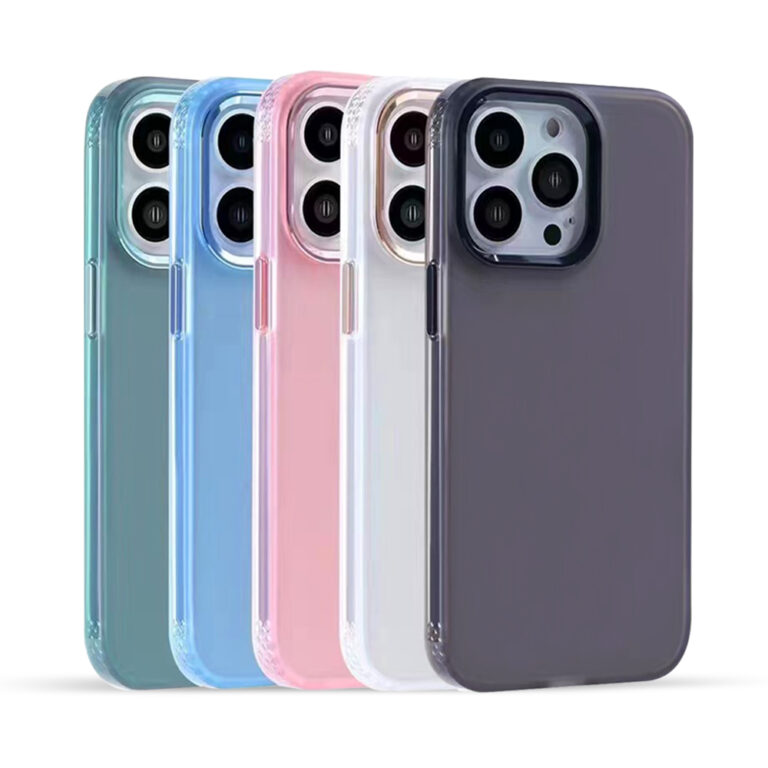
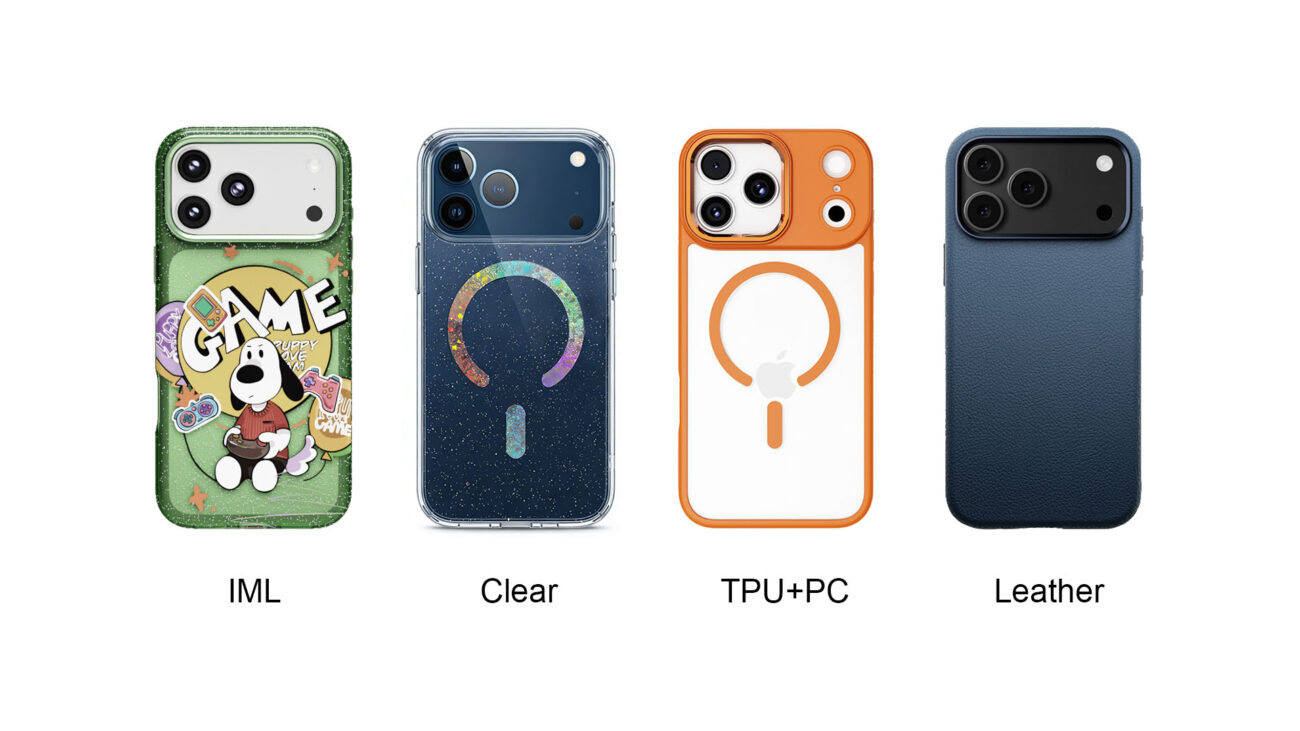
1. TPU + PC Hybrid Construction
This remains one of the most balanced options for B2B buyers. It offers shock absorption, structural stability, and a clean retail presentation.
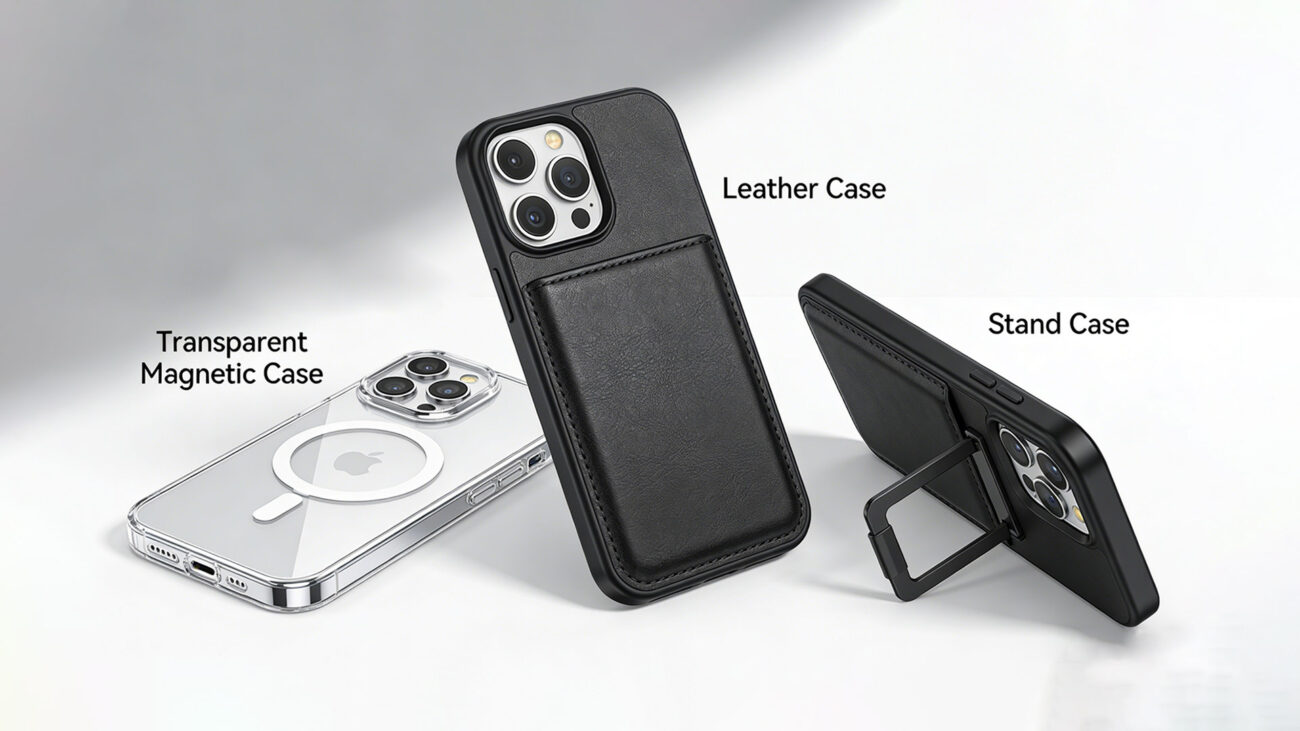
2. Magnetic Clear Cases
As premium buyers continue to value device appearance, clear magnetic cases remain important for launch collections, especially when supported by anti-yellowing positioning and accurate magnet alignment.
3. Leather or Leather-Like Finishes
For private label brands, leather-style cases still create a more premium shelf impression and often work well for brand-focused collections.
4. IML or IMD Decorative Finishes
For fashion-led or pattern-led brands, these finishes help combine visual customization with scalable production efficiency. [Internal Link: IML phone case solutions]
5. Stand-Function Cases
As phones increasingly serve media, work, and content creation needs, stand-equipped cases continue to offer real commercial value in both online and retail channels.
In short, the best iPhone 18 case strategy is unlikely to depend on one material alone. It will depend on offering a focused product range built around distinct buyer needs.
Magnetic Compatibility Should Stay at the Center of Development
Even without official iPhone 18 accessory specifications, magnetic ecosystem compatibility remains too important to ignore. The premium iPhone accessory market increasingly expects reliable magnetic alignment, everyday convenience, and stable compatibility with wallets, stands, and car mounts.
From a manufacturing perspective, that means focusing on:
- Accurate magnet ring positioning
- Consistent magnetic strength
- Stable alignment across production batches
- Accessory compatibility
- Material structures that do not weaken magnetic performance
For B2B buyers, this is no longer just an add-on feature. In many product categories, magnetic functionality is already a core expectation. If you are building a launch collection for premium channels, magnetic compatibility should be treated as a standard development requirement rather than an optional upgrade.
Button Precision and Cutout Accuracy Will Matter More Than Ever
When buyers receive a new iPhone case close to launch, they judge it quickly. They notice whether the buttons feel responsive, whether the speaker and charging cutouts align properly, and whether the case fits tightly without stressing the frame. That is why iPhone 18 case design should focus not only on appearance, but also on micro-level execution quality.
Even if the iPhone 18 family does not introduce a radical body change, brands should still expect to review:
- Side button placement
- Action or control interfaces
- Speaker and charging cutouts
- Lip height around the display
- Corner protection geometry
- Camera opening tolerance
The more premium the device looks, the less forgiving buyers become about fit issues. For private label brands, these details directly affect review quality, return rates, and repeat purchase performance.
Launch Timing May Affect Case Planning Strategy
One of the most important rumors for case suppliers is the possibility that Apple could separate the launch timing of Pro and non-Pro iPhone 18 models. Recent 9to5Mac reporting suggests that the iPhone 18 Pro and Pro Max could arrive in fall 2026, while the standard iPhone 18 may follow later. If true, that would change how many brands schedule case development.
If this timeline proves accurate, it would affect case planning in several ways:
- Pro-series molds would need earlier priority
- Standard-model accessories could follow a separate rollout calendar
- Inventory planning might need to be staged in phases
- Product photography and packaging could be updated in stages
- Development budgets may shift toward the earliest-launching models first
For OEM and ODM suppliers, this is actually manageable if planned correctly. A phased device release can create more room to focus on speed and accuracy for the highest-demand early models.
What Styles Should Brands Prepare First?
For most B2B buyers, the smartest first-wave iPhone 18 lineup will likely include a narrow but proven mix of styles rather than an oversized catalog.
Clear Magnetic Cases
These are essential for launch season because they match early-buyer demand for device visibility plus accessory convenience.
Slim Protective Hybrid Cases
These work well for both e-commerce and distribution because they balance appearance, protection, and price.
Leather or Premium-Texture Cases
These help brands build a more elevated product image and support a higher-margin tier.
Stand-Function Magnetic Cases
These are useful for brands that want stronger functional differentiation in a crowded market.
Heavy-Duty Protective Cases
These remain important for buyers prioritizing durability, though they should still reflect the cleaner visual direction of newer iPhone hardware.
For many brands, the winning strategy is not launching everything at once. It is launching the right small collection first, then expanding based on market feedback.
What This Means for OEM and Private Label Buyers
For brands, wholesalers, and distributors, the biggest takeaway is clear: iPhone 18 case design in 2026 will likely be evolutionary rather than chaotic, but it still requires disciplined preparation. Current reporting from MacRumors points to a familiar Pro direction, a likely front-display refinement through a smaller Dynamic Island, and a possible split launch schedule that could change how accessory programs should be staged.
That means suppliers should prepare by:
- Tracking hardware leaks cautiously
- Avoiding overcommitting to unverified dimensions
- Prioritizing mold flexibility
- Building magnetic-ready case programs
- Keeping premium material options ready
- Planning phased launch collections around model priority
For buyers working with a manufacturing partner, now is the right time to ask sharper questions:
How fast can samples be updated? How accurate is the mold verification process? How stable is magnetic alignment? How strong is the camera-area protection? Can packaging and branding be finalized quickly once final dimensions are confirmed?
Those are the questions that turn a trend-driven idea into a launch-ready iPhone 18 case program. If your brand is evaluating suppliers for the next Apple accessory cycle, this is also a good place to guide readers toward your manufacturing and packaging capabilities.
Final Thoughts
At this stage, the smartest way to approach iPhone 18 case design is not to wait for the final Apple announcement and rush everything at once. It is to prepare early, stay flexible, and focus on the details that actually affect product performance and launch readiness.
Even if the iPhone 18 lineup ends up looking broadly familiar, brands should still expect meaningful changes in areas like screen cutout proportions, front-edge balance, camera protection structure, magnetic alignment, and fit precision. For case suppliers and private label brands, these details will matter much more than dramatic design speculation.
The brands that perform best during a new iPhone launch are usually not the ones that guess the boldest. They are the ones that prepare the most carefully.
Ready to Develop Your iPhone 18 Case Line?
For brands, wholesalers, and retailers, the iPhone 18 launch is not just about reacting to Apple’s next release. It is about preparing a case lineup that fits the new device accurately, matches current market preferences, and reaches the market on time.
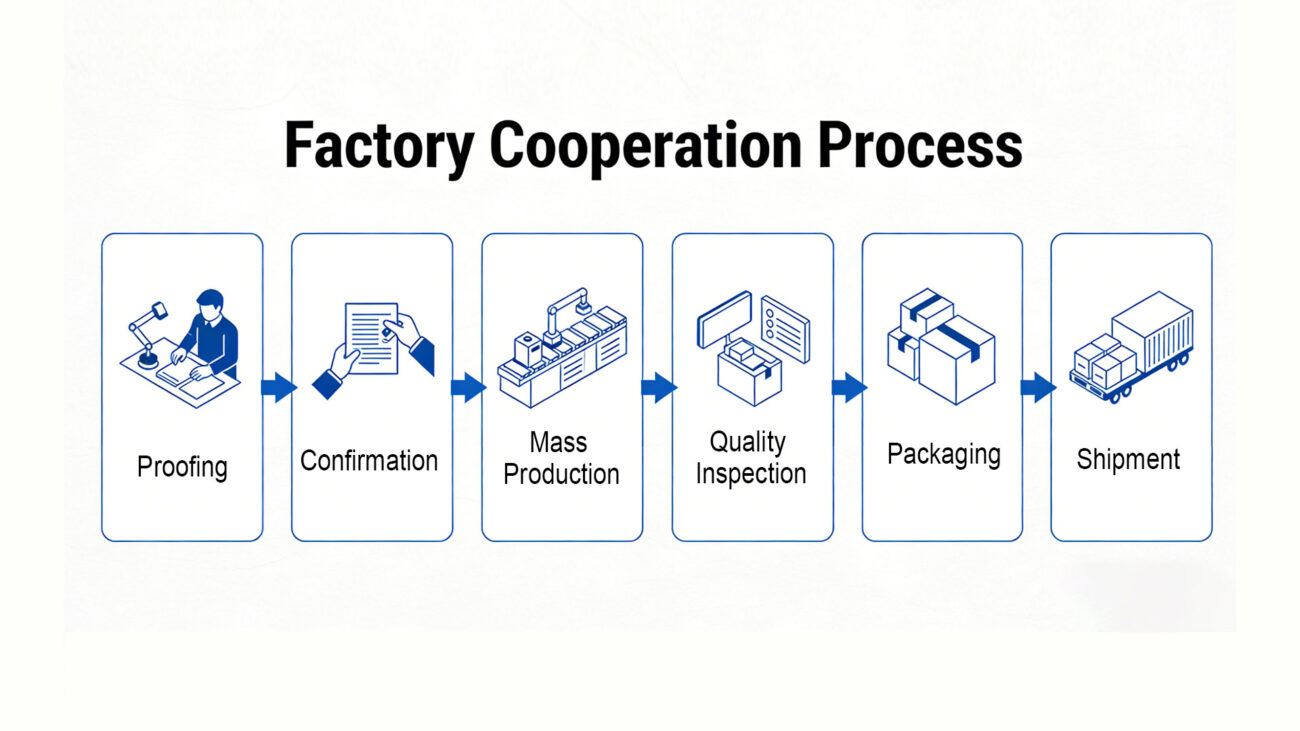
Runsuncase supports B2B customers with OEM and private label development for magnetic cases, leather cases, IML cases, stand cases, and custom packaging solutions. From early sampling to mass production, your team can position this as a partner-led process that helps brands move faster with more reliable development support.
If you are planning your iPhone 18 case program, now is the right time to start discussing materials, structure, magnetic alignment, packaging, and launch timing. Contact Runsuncase to discuss your next iPhone 18 case project.