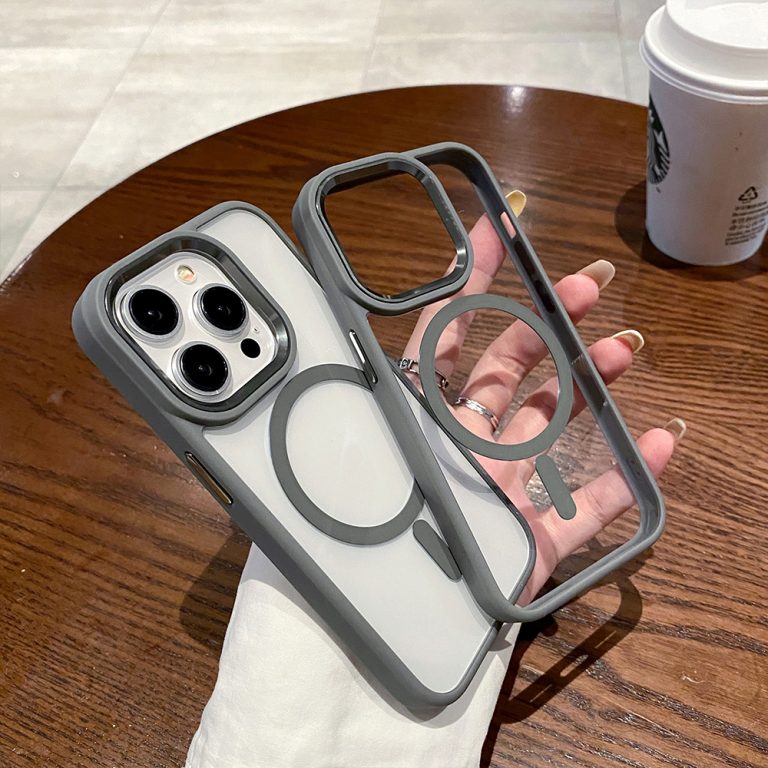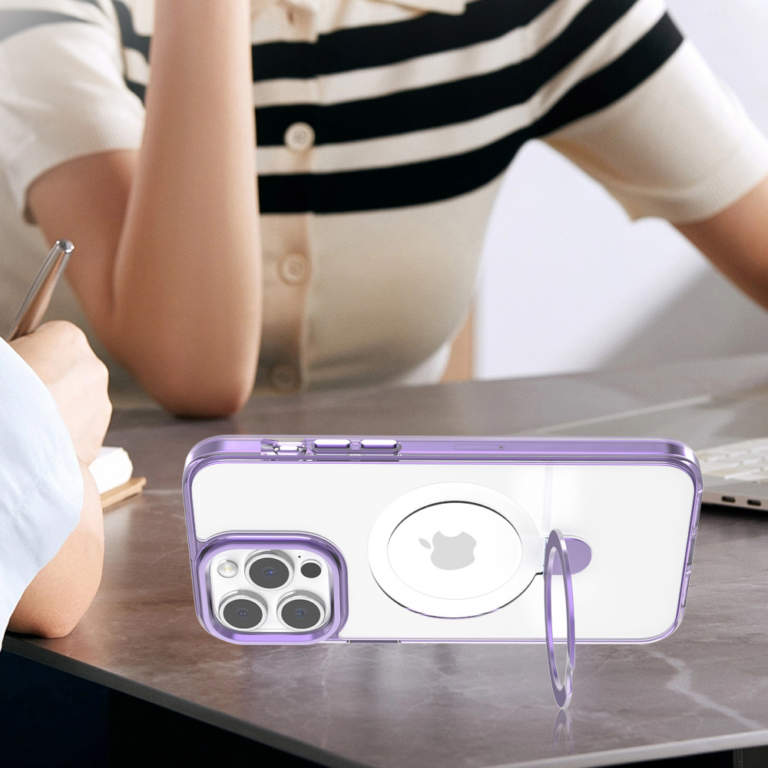
No single material is best for every custom phone case. Start by writing down three things: the experience you want users to have, the look and finish you need, and your target unit economics. Then ask each custom phone case manufacturer to tie its material proposal to that construction, that finish, and validation evidence for the same configuration.
Resin datasheets are useful for screening one property at a time. They do not prove how a finished case will feel or perform. You accept a proposal when evidence that matches your configuration meets your written criteria. If it doesn’t, you ask for clarification or compare suppliers on the same requirements.
Turn project priorities into material requirements
Written criteria come first, and material data comes second. Each priority tells you which property or case-level result needs evidence.
Translate experience, appearance, and economics into criteria
Each criterion should be specific enough that a supplier can show evidence for it:
- User experience: Describe who carries the case and how. For example: daily carry with frequent drops, a slim everyday case, or a rugged build. Name the outcome that matters most, such as absorbing impact energy, grip, or how easily the case goes on and off.
- Appearance and finish: Say whether you need clear, translucent, or opaque parts. Add the surface finish, color, and any printing or decoration. Pigment and finish choices can change results, so put them in the spec.
- Target economics: Set a target unit cost and order volume. Ask every phone case manufacturer to quote the same scope, including construction, finish, and packaging, so quotes can be compared fairly.
- Evidence map: For each priority, list the material property or finished-case result that would prove it, and who should supply that proof.
Use named-grade data as a limited screen
Exact grade data helps when your spec includes a matching property target. Covestro’s 3055DU typical-value listing gives Desmopan® 3055DU a Shore D hardness of 56 (1 second, DIN ISO 7619-1) and a flexural modulus of 128 MPa (2 mm/min, ISO 178). The 9385D typical-value listing gives Desmopan® 9385D Shore D 80 and 2,030 MPa under the same methods. Shore D measures hardness, and flexural modulus measures stiffness in bending. Because the test methods match, you can compare these two grades against a written target for those properties. The numbers still don’t tell you about grip, flex, or protection in a molded case.
Covestro also says these are typical values, not binding or warranted specifications. Results can vary with the mold or die, processing conditions, and coloring or pigmentation. So a colored or textured case built from either grade still needs its own validation.
If absorbing impact energy is one of your written priorities, two grades are worth asking suppliers about. Covestro reports a ball-impact resilience score below 20% for Desmopan® 3870AUSP and 3885AUSP. It compares that with 45% for typical polyester-based TPU of similar hardness. The same page lists 70A or 85A hardness options and says these grades bond to substrates such as polycarbonate without adhesive. That makes a TPU-and-polycarbonate hybrid build a fair question to raise with suppliers. The bond still has to be proven for your design and process. All of these are material-level claims from the manufacturer, not results from a finished case.

For appearance planning, Covestro lists Makrolon 3107 color options as transparent, translucent, and opaque for this polycarbonate grade. That fact applies to this grade only. It does not prove a molded finish, and it is not a comparison with TPU.
The result is a shortlist of questions to ask, not a winner. No datasheet can pick the material, construction, or finish for your case, and none of these sources compares cost. Use configuration-matched validation and quotes on the same scope to make the final call.
Check each supplier proposal against the same requirements
Judge every proposal against your written criteria, not against the supplier’s own framing. Take these steps in order:
- Get the full configuration. Ask for the exact material grade, not just “TPU” or “PC.” Also ask for the construction (single material, hard shell, or overmolded hybrid) and the finish, color, or pigment.
- Match the evidence to that configuration. Ask what was tested: the grade alone, a sample plaque, or a finished case with the same construction and finish. Evidence from a different color, finish, or build covers a different product.
- Link each result to a requirement. For each test result, have the supplier name the criterion it addresses and the pass level it was judged against. Your written priorities decide which tests matter. There is no universal phone case protocol to fall back on.
- Sort out weak support. A general claim with no record behind it, or a generic resin datasheet alone, doesn’t prove the finished case fits. Covestro’s own typical-value caveat is a good reason to treat grade data as a screen only.
- Decide. Accept when matching evidence meets your criteria. Ask for clarification when the configuration or pass level is unclear. Compare suppliers only when they quote and validate the same scope.

If you’d like us to review your written criteria before you request quotes, you can reach our team through our store homepage.
FAQs
Should we choose TPU or polycarbonate first?
Decide on your priorities first. The material family follows from them. A hybrid build that pairs a hard polycarbonate shell with a softer TPU section is one option to ask about when you need both stiffness and impact absorption. It still needs validation for your configuration.
Does color or finish change material performance?
It can. For its Desmopan® grades, Covestro says performance can vary with coloring or pigmentation as well as with molding and processing. Put the finish and color in your spec, and ask for evidence on samples that match.
Can a lower hardness rating tell us how a case will feel?
Not by itself. A hardness rating is measured on standard test specimens. How a case feels in the hand also depends on wall design, construction, and finish. Treat hardness as a screening number, then judge feel on samples of the actual case.
How do we compare quotes from different factories fairly?
Send each phone case factory the same written scope: grade, construction, finish, volume, and validation requirements. Quotes based on different builds or less testing aren’t comparable, even if one looks cheaper.