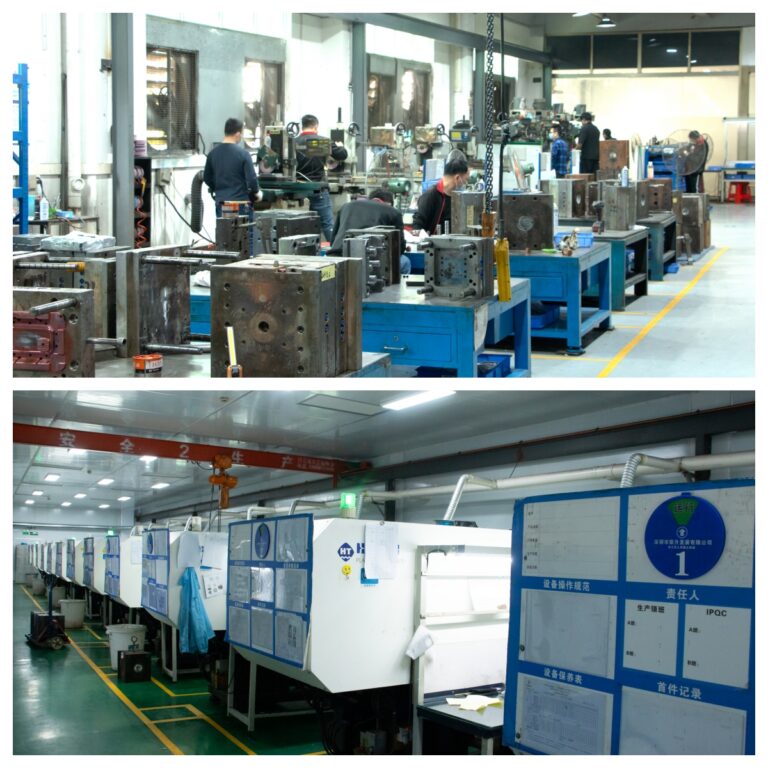
You can tell a phone case factory from a trading company by finding out who does the work, not by the label on the supplier’s website. Check who signs your order, which sites make each part of the case, and which steps are subcontracted. Then confirm who controls those steps and who answers for problems.
Many suppliers use a mixed model. They make some steps in-house and send others out. A clear responsibility map tells you more about fit than the words “factory” or “trading company” do.
Start with the Contracting Entity, Not the Label
First, find out which legal entity will sign or receive your purchase order, and ask the supplier to name it in writing. Then match that name across the quote, the draft PO, and the invoice details. If these names differ, ask how the entities are related before you go further, or review our official store guidelines to clarify direct supply terms.
Next, check that entity in the official business register for its country. For a UK company, Companies House register information shows the registered name, number, registered office, status, company type, and business description. Companies House also says it cannot always review every filing closely. Treat the record as an identity check only. A registered office or a business description that mentions manufacturing does not tell you which site makes your cases. Registers in other countries show different details, so check what each one actually covers.
Trace Each Production Step to a Site
Ask the supplier for a production map that links each relevant step to the entity and the physical address that performs it. This is how you separate a true phone case manufacturer from a company that coordinates other people’s work.

-
List the steps that matter for your product. Examples include molding, printing, assembly, and packing. Include only the steps your design actually needs.
-
Name an entity and a site for each step. Get a company name and a street address, not just a city or region.
-
Mark each step as in-house or subcontracted. A mixed model is fine as long as it is stated clearly.
-
Compare the map with records, and with observed work when the order justifies it. General factory-audit guidance from ECQA describes how auditors review documents and quality records, inspect production areas, and observe how products are made. Auditors then compare written procedures with what actually happens on the floor.
The same guidance warns that undisclosed subcontracting can add quality, compliance, and traceability risk. Subcontracting itself is not the problem. The risk comes from work that never shows up on your map.
Make Control and Accountability Explicit
A site map tells you who does the work. You also need to know who makes the decisions. For each step, write down who sets the requirements, who approves samples and changes, who releases quality checks, and who handles corrective action when a defect turns up.
Then put that accountability into your purchase terms. Decide whether the supplier you sign with stays responsible for work done by its subcontractors. Also decide whether you need notice or approval before work is subcontracted or moved to a new site. One real example is DuPont’s purchase order terms. They say the supplier cannot assign or delegate the order without the buyer’s prior approval, and they make the supplier responsible for its permitted subcontractors meeting certain policies. These are one company’s terms, not a standard rule. Use them as a model for clauses you negotiate to fit your own project.
Judge the Arrangement Against Your Project
Choose the arrangement that gives your project the visibility, control, and accountability it needs. Neither supplier type wins by default.
If your project depends on seeing the production floor, for example for a custom design or a first large order, confirm that the named sites and steps can be checked through records or an audit. A trading company can still be a good fit when you want it to coordinate the work and the contract clearly makes it responsible for its subcontractors. A self-described phone case factory can be a poor fit if key steps happen at unnamed sites or nobody owns corrective action. Treat each gap, such as a missing site, unclear subcontracting, or a step with no decision owner, as an open issue to resolve before you commit.

FAQs
Can a supplier be both a factory and a trading company?
Yes. Some suppliers make part of the product in their own facility and buy or subcontract the rest. List the model step by step so you know which work is in-house and which is not.
Is a factory audit the same as a product inspection?
No. A factory audit looks at the facility, its systems, its processes, and its records. A product inspection checks the goods in a specific order. ECQA’s guidance notes that buyers often use both, because a well-run factory can still have quality problems on an individual order.
What should I do if a supplier won’t name its production sites?
Treat it as an unresolved gap. Without named sites, you can’t trace the work or confirm who performs it. Ask for the information again in writing. If your project needs that visibility, keep the order on hold until you get it.
Does a business registration prove a company manufactures phone cases?
No. A register confirms identity details such as name, status, and registered office. It does not show which facility makes your cases, so you still need a production map and supporting records.
Next step: price your order
Send your device list, target quantity, and any print or material requirements to our team. We will reply with tooling cost, MOQ, sampling time, and lead time for your exact build. Request a quote