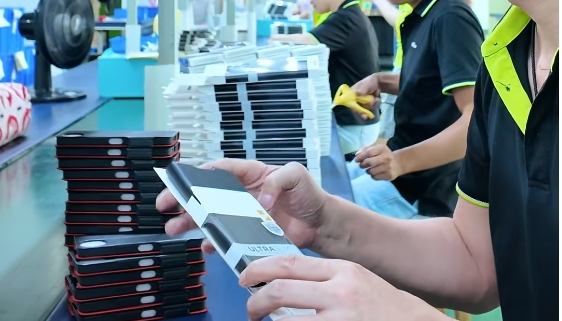
When the same phone case defects show up in more than one production lot, a one-time sort or credit won’t settle it. Ask three things in order.
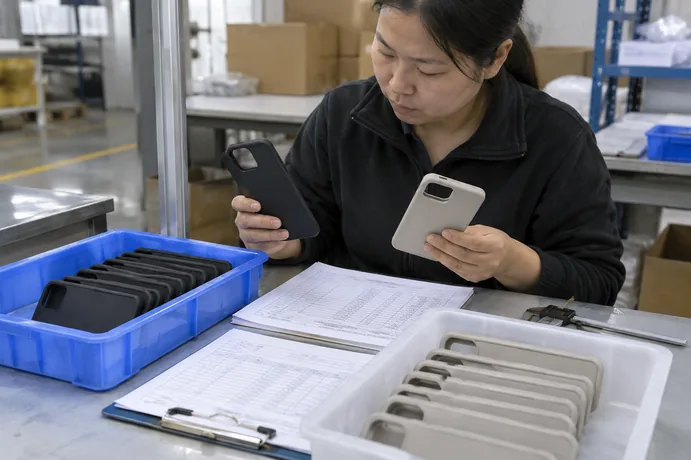
First, which products and lots are affected, with comparable evidence for each. Next, what verified cause explains both why the defect happened and why it got past inspection.
Last, settle what later-lot records will show that the fix worked before anyone calls the issue closed. The questions below follow that order. You can paste them into a supplier email or a corrective-action request.
A buyer’s question sequence for recurring phone case defects
Each step depends on the one before it. If the scope is vague, you can’t test the cause. If the cause is weak, the corrective action is a guess, and later-lot checks can’t prove much. Keep every answer tied to specific lots and records, not general assurances.

1. Establish the scope across products and lots
Start by making sure the reports you’re comparing actually describe the same problem. One label like “bad fit” or “discoloration” can hide different defects.
- Which products are involved? Ask for the phone case SKU or variant behind each report. Ask for a revision identifier only when it helps tell versions apart.
- Which lots or batches? Ask for whatever production identifiers let you match each report to a specific lot. These are practical requests. They aren’t an industry-standard record format, so accept any identifiers that let the reports be matched up.
- What exactly is the defect, and when does it show? Creation Technologies’ reference SCAR guidance asks suppliers to describe the defect in detail, along with any conditions under which it occurs or becomes visible. Ask for that description in the same terms for every lot.
- How much was inspected, and what was found? The same guidance asks for the extent of inspection and the findings, including whether parts were 100% inspected and how many bad pieces were found out of how many checked. Keep the two numbers apart. “12 defects” means one thing out of 50 pieces checked and something very different out of 5,000.
- What was contained? That reference also prompts suppliers to cover work in process, inventory, and product in transit or already in the customer’s stock. Ask whether each of these was reviewed. Treat this as a useful prompt drawn from one company’s guidance, not a universal obligation.
A good answer gives you a short lot-by-lot picture: product, lot, defect description, quantity inspected, quantity defective. If two reports don’t line up, settle that before you move on to cause.
2. Ask what caused the defect—and why it escaped
A recurring defect has two failures. Something produced the defect, and something let it ship. Graco’s supplier corrective-action instructions ask for causes that explain both how the problem occurred and why it wasn’t noticed when it happened. They state that all causes should be verified or proven, and that solutions should address both the failure and the lack of detection.
Pair each cause question with an action question:
- Occurrence cause: What evidence supports the proposed cause? Does it explain the conditions recorded across all the affected lots, or just one?
- Occurrence fix: What changed in the process, material, tooling, or method to remove that cause, and on what date?
- Detection cause: Why didn’t the existing inspection or process control catch the defect before shipment? Graco lists examples such as inadequate inspection frequency, inadequate gaging methods, and failure to follow existing procedures.
- Detection fix: What inspection or control change now catches the defect, and when did it start?
- Containment versus correction: Which actions were short-term containment, like sorting or holds? Which ones are the permanent fix for the cause?
Watch for a response that only covers one half. “Operator retrained” with no detection change, or “100% sorting added” with no process change, leaves part of the problem open. Also be wary of a cause that’s simply stated. Ask how it was confirmed, for example with a 5-Why analysis or a test that reproduces the defect. Don’t supply a likely cause yourself. Let the supplier’s evidence carry it.
3. Agree on later-lot evidence before treating the response as effective
Containment shows the bad parts were caught. It doesn’t show that the cause is gone. Later lots can show whether the fix holds in production.
- Which lots will prove it? Ask which later lots or shipments, produced after the implementation date, will be checked.
- What will be checked and shared? Ask for the inspection scope, the results (pieces checked and pieces found defective), and dated records. The Creation Technologies guidance treats objective evidence as the basis for judging effectiveness. Examples include inspection, process-control, training, and audit records.
- How long is the review window? Agree with the supplier on a window that suits the defect and your order volume. No universal number of clean lots applies to every case.
- What if pieces are missing? If the response leaves out lot identifiers, cause evidence, action dates, or follow-up results, ask for the specific missing item. Don’t treat the response as verified until you have it.
- What if the defect comes back? Reopen the investigation. Ask the supplier to reassess the cause and the action, and don’t count the earlier response as effective.
Your practical next step is to send the supplier the open questions from this sequence and set a date to review the first post-change lot together. You can reach our team through our store homepage.
FAQs
How many clean lots should I see before closing a recurring defect?
No supplied guidance sets one number for every case. As one example, Graco’s corrective-action process adds rejected parts to receiving inspection for a minimum of three future lots. That’s Graco’s internal rule. It gives you a reference point to discuss, but it isn’t a general standard. Set your window based on how serious the defect is, how often it showed up, and how many lots you receive.
Should other phone case SKUs be checked too?
Only when the verified cause points to something they share. Graco’s 8D guidance asks which other products with a similar design, material, or process could have the same root cause. If the cause traces to a shared material, mold, or process step, ask which other SKUs use it and whether they were reviewed. If the cause is specific to one SKU, a broader review may not be needed.
Is sorting or 100% inspection enough to close the issue?
No. Sorting and extra inspection are containment. They keep defective cases away from you while the cause is being fixed. Closure needs a verified cause, a corrective action for both the occurrence and the detection gap, and later-lot records showing the defect hasn’t returned.
What if the supplier’s root cause seems vague?
Ask how the cause was confirmed and whether it explains every affected lot. A statement like “human error” with no change to process or inspection doesn’t show what will stop the next mistake. Ask for the specific evidence and the specific change before you accept the response.