To keep phone case color standards consistent across a multi-model range, define one shared color target with an ID and revision. Then list every model and color variant it covers, and link each distinct finish to its own approved sample. Review every trial against its current reference under the same documented conditions, set acceptance limits with your supplier for the actual material and finish, and log each decision so later runs and new models trace back to the same intent.
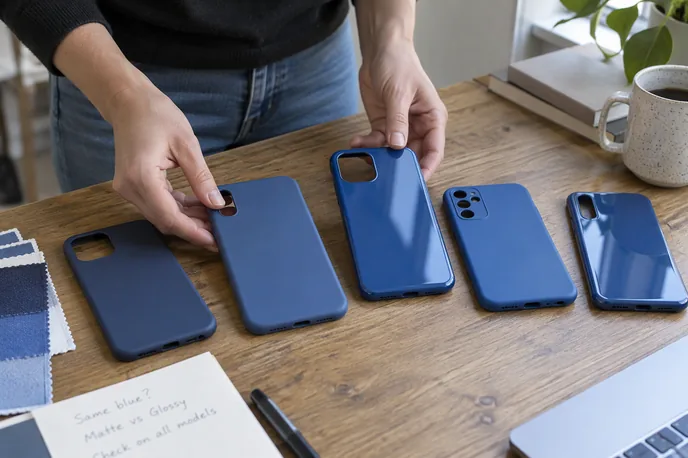
One approved sample for one model is not a range standard. A matte cover on one model and a glossy cover on another can share a color intent and still look different. Your standard needs to explain which of those differences are planned and which ones count as drift.
Define one color target for the full case range
The range standard starts with a named target that sits above any single product. Every model, material, and finish then points back to that target. This gives sourcing, product, and QC teams one shared definition of “Midnight Blue,” whatever case it appears on.
Give the shared color intent an ID and coverage
Assign the color family a short ID and a revision number, such as a family code plus “Rev. A.” This ID stands for the color intent itself. It is not the same thing as any one sample. When the target changes, raise the revision so older approvals stay tied to the version they were judged against.
Next, build a coverage record. A simple table works well:
| Field | What to record |
|---|---|
| Phone model | Each model the color ships on |
| Color variant | The variant name used in your catalog |
| Target ID and revision | The shared family target it follows |
| Representative sample ID | The approved sample for that finished appearance |
This record makes gaps visible. If a new model launches with no linked sample, the team can see it before production. It also keeps the family target separate from the sample records for different finished surfaces, which matters in the next section.
Choose a reference that represents the finished appearance
The physical reference should look like the product you actually sell. X-Rite’s guidance on selecting a physical color standard says a standard should represent the product color and relevant surface traits such as texture, gloss, or angle-dependent effects like metallics and pearlescents. A flat glossy chip may not be a fair reference for a soft-touch matte case.
The same guidance lists practical questions to ask about a standard. How do light, heat, and age affect it? Can the manufacturing process reproduce it, or is it a one-time color? Can it be replaced if it is lost or damaged? A faded or one-off reference quietly moves your target over time.
In the range record, note who owns each reference, where it is stored, and which revision it represents. Keep a backup or a documented way to remake it.
Account for model, material, construction, and finish
Different models in one range often use different materials, wall builds, or surface treatments. Your standard should keep one color intent while allowing for appearance differences you planned. It should still catch real color errors.
Separate intended appearance from unwanted color drift
For each sample, record the material, construction (for example, a single-material shell versus a two-part build), finish, and any other surface condition that could change the look. Compare like with like where you can. A matte trial should be judged against the approved matte sample, not the glossy one.
If the range uses different finishes on purpose, keep the same family ID. Link each intended appearance to its own approved representative sample. That way a gloss difference between two models is a documented design choice, not a failed check.

This matters for measurement too. ASTM D2244 notes that gloss, texture, and other appearance factors can affect how well a measured color difference matches its commercial acceptability. So a number alone does not tell you whether two finishes “match.” Not every appearance difference is a color defect. The question is whether the trial departs from the approved sample for its own finish.
Use an appearance-specific review for special cases
The ASTM practices cited here have limits. D2244 covers opaque specimens, and ASTM D1729’s guidance for visual appraisal covers diffusely lit opaque materials. D1729 states that critical appraisal of metallic and pearlescent materials needs directional light, close to a geometric simulation of direct sunlight. That viewing setup is outside its scope.
For phone cases, this means two practical rules:
- Clear or translucent cases: agree with your supplier on an assessment method suited to that appearance. Validate it with representative finished samples before you apply acceptance limits.
- Metallic or pearlescent effects: expect that critical review may need directional lighting beyond a standard diffuse viewing booth. Document the setup you agree on.
Do not assume an opaque-sample procedure carries over to these cases without checking it on real parts.
Review samples, set limits, and record decisions
Approval should follow the same path every time. That way two reviewers, or the same reviewer six months later, reach a decision you can defend.
Compare samples under repeatable conditions
Compare each trial with its current approved reference, using the same documented visual setup each time. Write down the light source, viewing setup, and who did the review.
For diffusely viewed opaque samples, D1729 recommends simulated average daylight, D65. It also says visual appraisal is especially important when the inspected product is not the same material as its color standard. That is common in a case range, where a printed card or a sample from another material may serve as the reference.
If you use instruments on opaque samples, keep the same instrument method and color-scale system for every comparison. D2244 says color differences and tolerances should only be compared when they come from the same color-scale system. No simple factor converts them accurately between systems. Treat a reading as input to the decision, not the decision itself.
Set range-specific limits and keep a decision log
No universal numeric tolerance applies to every phone case. D2244 states that for product specification, the purchaser and seller should agree on the permissible tolerance and the procedure for calculating it. Each material and use condition may need its own limits. D2244 also says instrumental tolerances should be correlated with visual appraisal of differences in hue, lightness, and saturation.
In practice, set limits for each finish group using reviewed samples from your actual range. Confirm visually that trials inside the limit look acceptable and trials outside it do not. Then put the agreed limit and calculation method in writing with your supplier.
Keep a decision log with these fields:
- Sample ID and target revision
- Phone model, material, construction, and finish
- Supplier and lot
- Comparison conditions and method (visual setup, instrument, color scale)
- Decision and reason
- Exception approval, with who approved it and why
- Any resulting change to the target, reference, or process
When a new model joins the range, this log shows which reference it should match and what limits apply. When a dispute comes up, it shows exactly what was approved and under which conditions. We suggest reviewing the log whenever a reference is replaced or a supplier changes.
FAQs
Can one physical sample be the color standard for every model?
Usually not on its own. One sample can anchor the shared color intent, but a reference should represent the product’s surface traits, such as gloss and texture. If your range has several finishes, link each one to its own approved sample under the same family target.
Is there a standard Delta E tolerance for phone cases?
No universal value is established for all phone cases. ASTM D2244 says the buyer and seller should agree on the tolerance and calculation method for the actual material and conditions, and check it against visual review. Base your limits on samples from your own range.
Do D65 viewing rules work for clear or metallic cases?
Not automatically. ASTM D1729’s D65 recommendation covers diffusely lit opaque materials, and critical review of metallic or pearlescent effects needs directional lighting outside its scope. For clear, translucent, or special-effect cases, agree on a method with your supplier and validate it on finished samples.
What should happen when the reference sample fades or gets damaged?
Replace it through a documented process and raise the target revision if the color changes. This is why stability and replaceability matter when you first choose the reference. Note the change in the decision log so past approvals stay tied to the right version.