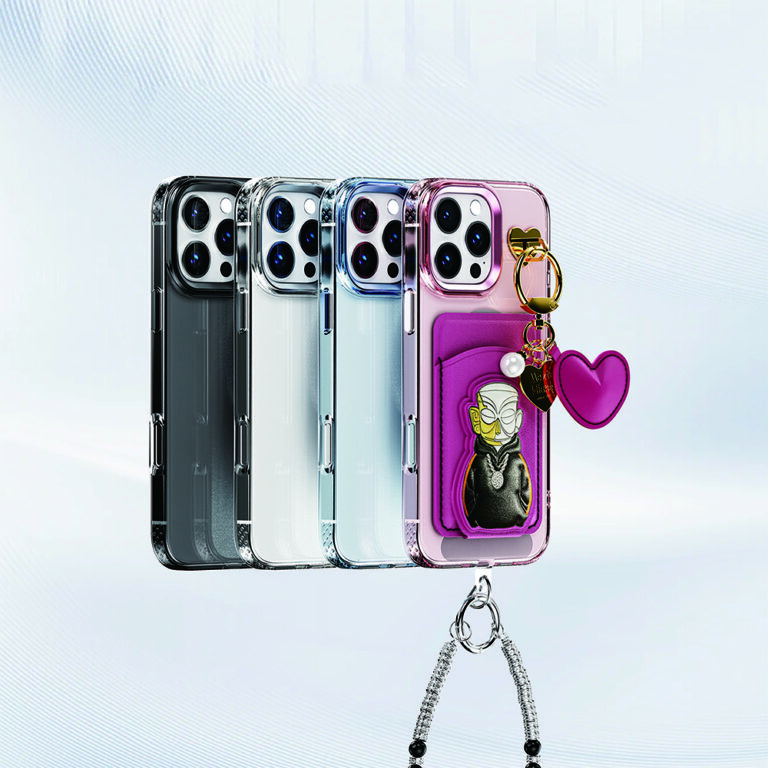
To inspect a bulk phone case order with several models and colors, treat each model-and-color combination as its own small inspection. Give every variant its own record, link it to its own approved reference, check its labels, color, and fit against that reference, and record its result separately. One variant passing or failing should never decide the status of the whole order.
That’s the core of a sound multi-SKU phone case inspection. The rest of this guide shows how to set up the record, run the checks, and keep results from bleeding across variants.
Build a traceable register for every model-and-color variant
Mix-ups usually start before anyone opens a carton. If the inspection sheet lists “black cases” without the exact phone model, a unit from one variant can easily be judged against another variant’s sample. A register prevents that by giving every ordered combination a fixed identity from the purchase order through to the final result.
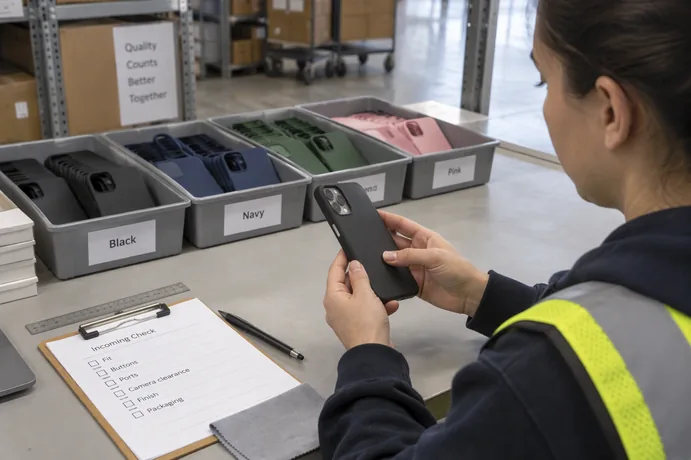
Create one variant record for each ordered combination
Make one row for each phone-model-and-color combination on the order. Three models in four colors means twelve rows, even if some colors look nearly identical.
This approach borrows from retail product identification. GS1 US variant identification guidance for apparel and general merchandise says each item variant, including color, can be assigned its own GTIN (Global Trade Item Number) and barcode so it can be identified and tracked. GS1 doesn’t write rules for phone case inspection registers. Using the same idea here is a buyer-side adaptation, but it fits well: each model-and-color combination gets an ID that can’t be confused with any other.
If your variants already have GTINs or barcodes, use them as the variant ID. If they don’t, create an order-specific inspection ID and tie it clearly to the purchase-order SKU or line. Keep in mind that a GTIN identifies the variant, not each physical case. Sampled units need their own references linked back to the variant row.
| Register field | What to record |
|---|---|
| PO SKU or line | The purchase-order reference for this variant |
| Variant ID | GTIN/barcode, or an order-specific inspection ID |
| Exact phone model | Full model name as ordered |
| Color name or code | The color as specified on the order |
| Ordered quantity | Units ordered for this variant only |
| Carton or container IDs | Where this variant’s units are packed |
| Approved reference and revision | Spec, artwork, or physical sample, plus version or approval date |
| Sample or unit IDs | References for each inspected unit, distinct from the variant ID |
| Result and disposition | This variant’s outcome only |
Each row should stand on its own. An inspector should be able to pick up any sampled case, read its unit reference, and trace it to one variant, one reference, and one result.
Attach the controlling requirement and revision
Every row needs the approved specification, artwork file, or physical sample that defines what “correct” means for that variant. Record its version, revision, or approval date when available. If the artwork for one color was revised mid-project, the register should name the revision in force, not the earlier file.
This mirrors general quality-planning practice. ASQ quality-plan documentation guidance describes quality plans as specifying the relevant specifications and inspection activities, plus a documented procedure for changes. ASQ also notes that documenting plans helps facilitate traceability and provide objective evidence. That guidance is general and not specific to phone cases, but it explains why the reference and revision belong on the same row as the variant.
Keep requirements tied to their own model-and-color combination. Don’t assume a navy case for one model uses the same color standard or cutout layout as the navy case for another. If a variant’s identity or controlling reference is missing or conflicting, mark that variant unresolved. Wait until the reference is confirmed instead of inspecting against another variant’s version.
Inspect each variant against its own criteria and record its status
With the register in place, the checks themselves become simpler. You run the same types of checks on every variant, but each one is judged against that variant’s own reference and recorded on that variant’s own row.

Verify labels, appearance, and model fit
Labels. NBNQC’s phone-case inspection checklist recommends checking model labels, barcodes, color labels, and carton marks, and watching for mixed models or wrong quantities. In a multi-variant order, compare each label to the matching register row. Don’t infer a unit’s identity from the carton next to it or from another unit that looks the same.
Appearance and color. The same checklist says to compare material and appearance with the approved sample or specification. It lists color difference, scratches, stains, dents, and deformation among common appearance issues. Compare each unit only with its own variant’s approved reference, under the viewing conditions you agreed on. A slight shade shift may matter for one color and not be defined at all for another, so let the order’s criteria decide.
Model fit. NBNQC’s checklist also says the case should fit the correct phone model and should not block the camera, charging port, speaker, microphone, buttons, or sensors. Check fit on the exact intended model for that row. Similar-looking models can differ in camera and button placement, so a case that fits one may not fit the other. If a real phone or dummy phone is available, the checklist notes that fit can be checked more accurately.
Add function checks, such as card slots or magnetic closures, only when the case design includes them and the order requires them.
Keep quantities, findings, and dispositions separate
Record everything against the matching variant row or a record linked to it:
- The inspection basis: which reference and revision you used
- Inspected quantity and the sample or unit IDs
- Each finding, with a photo or issue reference
- Counted quantity versus ordered quantity for that variant
- The disposition for that variant only
Review each variant against its own requirements and agreed acceptance criteria. If the blue case for one model shows a fit problem, that finding belongs to that variant. It doesn’t fail the black case for a different model, and a clean result on one variant doesn’t clear the others.
Sampling methods and pass thresholds should come from the inspection plan you agreed with your supplier. ASQ quality-plan guidance notes that a quality control plan may specify product tolerances, testing parameters, and acceptance criteria. No universal sampling rate or defect limit applies to every phone case order, so don’t borrow one by default.
When a unit’s identity, its reference, or whether a finding applies to it is uncertain, mark that variant unresolved. Don’t fold it into an order-wide pass. A short list of unresolved variants gives you and your supplier a clear set of questions to settle before release.
FAQs
Can I use one pass or fail result for the whole order?
It’s better not to. Each model-and-color variant has its own reference and fit requirements, so each one needs its own result. A single order-wide verdict can hide a failed variant behind good ones, or hold back variants that passed.
Does a GTIN identify each individual phone case?
No. In the GS1 approach, a GTIN identifies an item variant, such as a specific color. Many identical units share it. For inspection, give each sampled unit its own reference and link it to the variant’s GTIN or inspection ID.
What should I do if two artwork versions exist for one variant?
Mark that variant unresolved and confirm which version is in force before inspecting it. ASQ’s quality-plan guidance includes a documented procedure for changes. Once confirmed, record the governing revision on the variant’s row so later checks use the same reference.
How many units should I sample per variant?
The supplied guidance doesn’t set a universal number. Use the sampling method and acceptance criteria in the inspection plan you agreed with your supplier. Apply that plan to each variant separately so each one gets its own result.