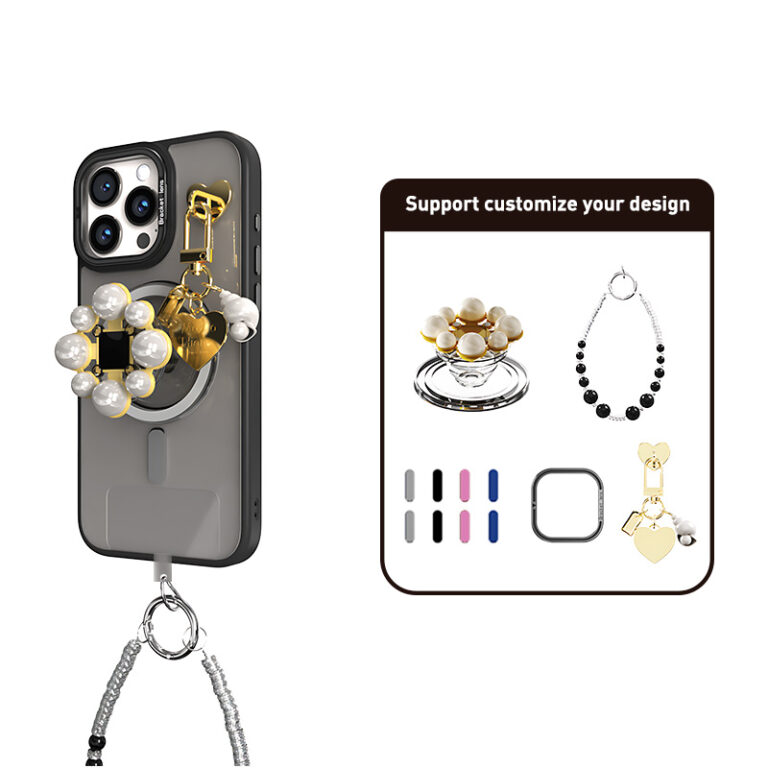
A pilot order makes sense when a risk is still open, that risk could change your scale-up decision, and your approved sample never tested it. A small pilot run can recreate the condition the sample missed. Two examples are production repeatability and your own receiving workflow.
If the sample already answers your only open question, a pilot may tell you little. Whichever custom phone case manufacturer you work with, decide what the pilot needs to prove and what counts as a pass before you place the order. Then apply the result only to what you actually tested.
When a pilot adds decision value
A pilot earns its cost when it answers a specific question that a sample can’t. General caution is not a good enough reason. Start by naming the condition that is still unknown. Then name the decision it could change, such as whether to go ahead with the full order, change the order, or wait.
Next, ask two questions. First, did your approved sample go through that condition? A single sample shows you one unit. It does not show you a production run or a delivery arriving at your dock. Second, can the pilot you have in mind actually include that condition? If it can’t, the pilot gives you a second sample at a higher cost.

When both answers point to a gap that matters, a pilot is a reasonable step. When the remaining uncertainty wouldn’t change what you order, how much, or when, don’t make a pilot mandatory just because the launch feels big.
Two risks a sample may not answer
A sample shows one unit. It does not show how output behaves across many units, and it does not show how a real shipment moves through your operation. Here are two separate places a pilot can help:
-
Production repeatability. Name the unit-to-unit variation you’re worried about, such as color match, print placement, or fit across units. Then check it in units made under the intended production conditions, not in a hand-finished sample. Keep in mind that one run only tells you about that run. It doesn’t test variation between separate runs. If run-to-run consistency is your real concern, one pilot can’t settle it.
-
Your receiving workflow. Reviewing a sample doesn’t exercise how you handle a delivery. With an actual pilot shipment, you can test the steps that matter to your business: receipt, counting, identification and labeling, inspection, recording discrepancies, and put-away. This checks your process as much as it checks the factory’s output.

Treat both as proposed checks for a specific uncertainty. A pilot of either type does not guarantee how later orders will go.
When sample evidence may be enough
You may not need a pilot when your only open question is about one unit’s appearance or fit and the approved sample was made to the relevant specification. In that case, the sample answers the question you actually have.
Base that call on what the sample really answered, not on the fact that it was approved. Approval tells you one unit met the spec. It doesn’t tell you anything about production-wide consistency or about receiving. If a material condition was never tested, the sample hasn’t resolved that question, however good it looked.
The reverse also applies. If no unresolved production or receiving question would change the scale-up decision, skip the pilot. Don’t pay for evidence that won’t change what you do next.
Set the pilot’s purpose and pass criteria
Write the plan down before you order, and judge the result only against it. This matches general quality practice. ASQ’s DMADV outline lists pilot runs as a requirements-checking tool for showing that a detailed design meets customer requirements. It then calls for verifying the output against those requirements and specifications. That guidance is general, so the steps below adapt it to a phone case pilot:
-
Name the risk and the requirement. State the one uncertainty the pilot addresses. Tie it to the approved product spec or your written receiving requirement.
-
Fix the scope. Record the product variation and revision in the pilot, such as the device model, colorway, and artwork version. Also record the production run or receiving steps it covers. Anything left out is outside what the result can tell you.
-
Set criteria and records in advance. Base pass criteria on the approved spec or receiving requirement, not on a generic quantity or threshold. Decide who records results, how they record them, and how discrepancies get logged and handled.
-
Read the result within scope. A pass lets you consider scaling up, but only for the run, variation, and workflow you tested. A failure means you hold or revise the decision and fix the issue first. If a required condition or record is missing, the result is inconclusive. Get the missing evidence or test the uncovered scope before you rely on it.
FAQs
Does a passed pilot cover other colorways or device models?
No. A pass applies to the variation and revision you tested. A new colorway, device model, or artwork revision is a different condition. Check it against its own spec before you count on it.
Can one pilot prove repeatability for future reorders?
Not by itself. A single run shows consistency within that run. Variation between separate runs needs evidence from more than one run.
Who should be involved in setting pilot criteria?
Include the people who own the approved specification and the people who run receiving. Each criterion needs a clear source, and someone has to be named to record the results.
Should the pilot use our normal receiving process?
Yes, if receiving is the risk you’re testing. Run the shipment through the same receipt, count, inspection, and put-away steps you plan to use at full volume. A special one-off process won’t tell you how a full-volume order will go.
Next step: price your order
Send your device list, target quantity, and any print or material requirements to our team. We will reply with tooling cost, MOQ, sampling time, and lead time for your exact build. Request a quote