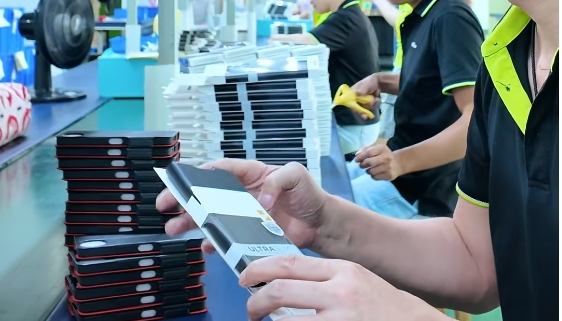
To verify a phone case origin claim, start by tying the claim to the exact cases on your purchase order. Then ask the supplier where each source material was made and where each production step took place, and check that their records match your order. Compare that production history with the U.S. rule that fits the purpose of the claim.
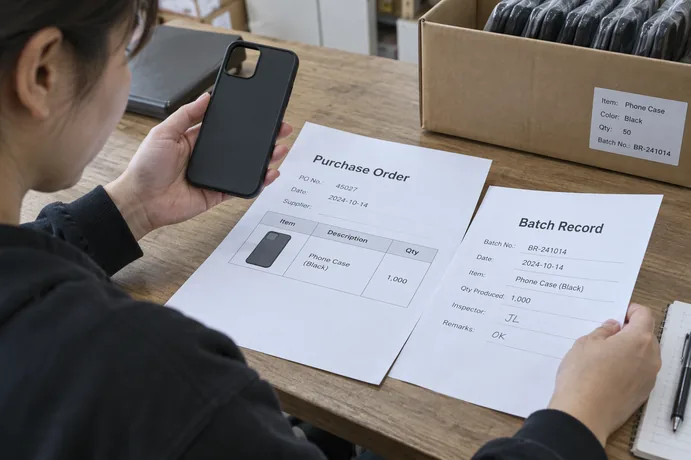
A supplier’s address or ship-from port does not prove where the cases were made.
This method helps you decide whether to rely on a claim. It is not a legal ruling. If the records leave a material gap, keep the claim unverified and get case-specific guidance.
Build an order-specific origin check
Before you review any documents, set the scope of the check. You need to know what the claim is supposed to prove and which cases it covers. If you skip this step, accurate records can still answer the wrong question.
Clarify what the origin claim is meant to establish
Origin claims serve different purposes. A supplier may be telling you what country should appear on the case or its packaging. That is a country-of-origin marking question. Or the claim may support a trade program or free trade agreement, which can affect duty treatment.
CBP treats these as separate ruling topics. Its guidance notes that trade program rulings may also need information on costs incurred in each production country, on top of the production details used for origin rulings. So ask the supplier to state the purpose of the claim in writing. That answer tells you which rule your review has to address.
Identify the ordered cases
Next, pin down exactly which products the claim covers. Use the full product description and every identifier you have, such as:
- SKU or model number (for example, a specific case style for a specific phone model)
- Purchase-order line number
- Production lot or batch number
A blanket statement like “all our cases are made in Country X” doesn’t connect to your order. A factory may run several lines, use subcontractors, or move work between sites. Put these identifiers in your evidence request. Then check every record you get back against them.
Trace materials and production steps
The core of the check is a production history tied to your order. CBP’s origin-ruling guidance says the origin of goods depends on where the production steps took place. It lists two details as helpful: the countries where each source material was made or harvested, and the countries where each production step took place. Use those two points to frame your request.
- Request a stage-by-stage country map. Ask the supplier to list each main material in the case, such as the shell material, any soft inner layer, and printed or decorative parts. Next to each one, they should name the country where it was made. Then ask for each production step and the country where it happened, such as molding, printing or coating, assembly, and packing.
- Ask about outsourced work. Have the supplier name any stage done by a subcontractor or at another plant, plus the country where that work took place. Orders with steps in more than one country call for the closest look.
- Request records that support the map. Useful examples include bills of materials or material-origin declarations, production or batch records, process-flow descriptions, and subcontractor details. These are practical tracing aids. CBP does not set them out as a required checklist, and no single document settles origin in every case.
- Cross-check the identifiers. Confirm that the SKU or model, PO line, and lot number match across the supplier’s statement and each record. A batch record for a different lot or model doesn’t support your order.
- Flag gaps and conflicts. Note any step with no country listed, any stage the records don’t explain, and any record that points to a different country than the claim.

If the documents can’t be tied to your ordered cases, or a material production stage remains unexplained, treat the claim as unverified. The last section covers how to handle that.
Compare production facts with the applicable U.S. origin rule
Once you have a reconciled production history, compare it with the rule that fits the claim’s purpose. Ask where the materials originated and where the work happened.
For marking, start with the Part 134 boundary
For U.S. country-of-origin marking, 19 CFR § 134.1 defines country of origin as the country of manufacture, production, or growth of a foreign article entering the United States. If further work is done or material is added in another country, that work must effect a “substantial transformation” to make the other country the origin under Part 134. There is one qualification. For a good of a USMCA country (the United States, Canada, or Mexico), the Part 102 marking rules determine the origin.
In practice, this rule is why the stage-by-stage map matters. Suppose the materials and some production happen in one country and later work happens in another. The question is whether that later work counts as a substantial transformation. CBP’s general marking page describes a substantial transformation as one that creates a new article with a different name, character, and use. Whether a particular step does that for a particular phone case depends on the facts. Your review can bring those facts together, but it can’t apply this test as a formula and settle the case on its own.
Do not extend a marking rule to every claim
The Part 134 definition applies to marking. It does not work as a general test for every trade program or preferential-duty claim, and those claims may follow different rules and need other information, such as production costs. If the supplier’s claim supports a trade program, compare the production history with that program’s rule, not the marking definition.
For any purpose, your job as a buyer is to collect accurate, order-linked facts and check whether they line up with the claim. Applying the law to a specific shipment belongs to qualified trade professionals and, when needed, to CBP.
Keep unresolved claims unverified and escalate
When evidence is missing or contradictory, don’t rely on the claim. Work the gap with the supplier first. If that doesn’t resolve it, escalate.
Close record gaps with the supplier
Send the supplier a specific follow-up. Name the missing step, the mismatched lot or SKU, or the conflicting country, and ask for an explanation plus records that cover your order. A reconciled, order-linked account is the goal. A general certificate or a repeated statement doesn’t fix a specific gap.
While a material step or conflict is still open, treat the claim as unconfirmed in your own records and decisions. You can contact us through our store homepage if you need assistance with an order.
Seek case-specific guidance when uncertainty remains
Some questions stay open even with good records. Common examples are multi-country production and unclear transformation steps. CBP’s marking guidance cautions that relying solely on its general marking information may not be considered reasonable care. It also notes that origin issues can involve complicated factors, such as raw materials from one country and assembly in another, and that an importer may wish to get a binding ruling from CBP in those cases.
A binding ruling has a timing limit. According to CBP’s ruling-request guidance, a ruling request must concern prospective shipments. That makes it a planning tool for future orders, not a way to check goods that have already shipped. For a material question, talk to a licensed customs broker or trade attorney, and consider a ruling request before the next shipment.
FAQs
Does a supplier’s address prove where my phone cases were made?
No. Under the U.S. marking definition, origin depends on where the goods were manufactured or produced and whether any later work was a substantial transformation. An office address, factory headquarters, or ship-from port doesn’t show those facts. You need a production history tied to your order.
Is there a required document checklist for verifying origin?
CBP’s origin-ruling guidance doesn’t set a universal checklist. It names helpful information: the countries where source materials were made and where each production step took place. Bills of materials, batch records, process flows, and subcontractor details are useful ways to trace that information, but they are examples, not a guaranteed complete set.
Can I get a CBP ruling for cases that already arrived?
CBP says a ruling request must concern prospective shipments. For goods already imported, talk to a qualified customs professional. You can use a ruling request to plan future orders of the same product.
Does the same origin rule apply to trade program claims?
Not necessarily. The Part 134 definition covers country-of-origin marking, and USMCA goods follow Part 102 marking rules. CBP handles trade program rulings separately, and they may also need cost information, so confirm which rule applies to your claim.