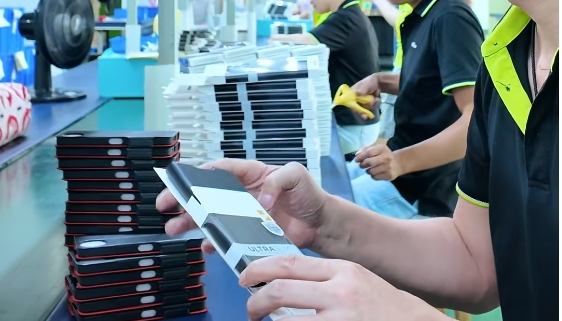
A phone case prototype is a physical sample used to check the design: fit, function, finish, branding and packaging, so engineering can sign off. A “pre-production sample” has no single industry definition. What it shows depends on the supplier, so ask what that specific sample represents before you treat its approval as a green light for production.
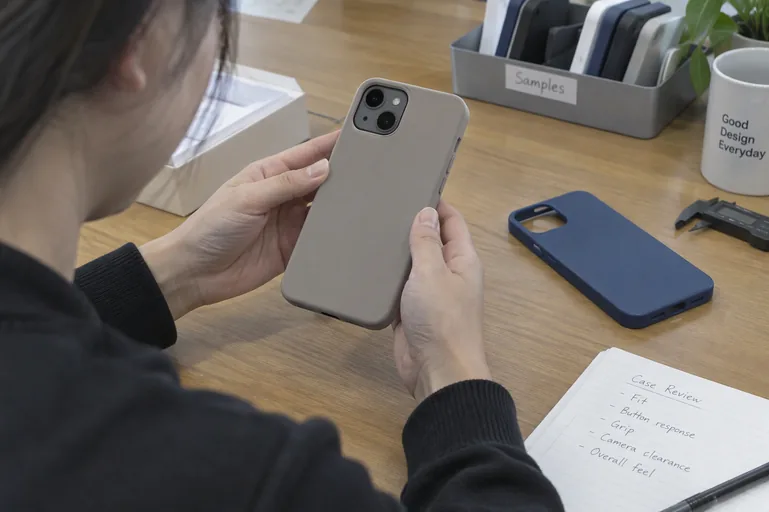
When you review phone case samples, the label on the box matters less than two questions: what is this sample meant to check, and what happens once you approve it? The sections below cover what our own documented workflow says, where the evidence stops, and how to close the gap with any supplier.
Prototype vs. pre-production sample: the practical difference
The difference that matters is what each sample is meant to answer. We can describe the prototype stage in detail from our own process. A sample called “pre-production” needs the supplier to define it, because the term itself doesn’t prove how close the sample is to the final order.
What the documented prototype stage validates
In our phone case development workflow, the prototype stage turns the product brief into physical samples for engineering sign-off. Each review round targets specific structural or cosmetic criteria, so feedback stays focused and doesn’t become a loose “looks good.”
Fit and function come first, because a dimensional error affects the whole run. We check the case on real reference devices for button feel, port clearance, camera lip height, screen edge wrap, and how easily it goes on and comes off. Feature cases need their own checks. Magnetic cases get pull-force testing with wireless chargers and car mounts. Kickstands need to work smoothly in portrait and landscape. When something needs adjusting, we record the exact dimensional difference so the tooling change stays targeted.
After fit is confirmed, we review the case and its retail packaging together. That covers Pantone color matching, surface texture, logo accuracy, coatings and metal accents, and on the packaging side, blister tray tolerances, model compatibility printing, scannable EAN/UPC barcodes and user instructions. For a collection that spans several devices, we compare samples side by side so the logo placement looks balanced on different case sizes.
So a prototype in our process isn’t a rough sketch. It’s a structured review of whether the design works and presents the way the brand intends.
What the pre-production label does—and does not—establish here
The term “pre-production sample” is often read as “near-final, matches the order.” That’s a reasonable expectation, but it isn’t a verified standard. Our documented workflow doesn’t define a separate sample with that name, and the other supplier material we reviewed uses “prototype or pre-production sample” as one combined step instead of two distinct stages.
That leaves a practical problem. Two suppliers can use the same label for different things. One might mean a sample made with production tooling and final materials. Another might mean the last prototype round before file lock. A third might use it for a packed unit with the retail box. None of these meanings can be assumed from the word alone.
Before you compare fidelity, have the supplier spell out what their sample is made with and what it matches. Ask whether it uses the final mold, material, color, finish and packaging, and which product version it ties to. Only then can you say how it differs from the prototype you reviewed earlier.
What sample approval does—and doesn’t—authorize
Approving a sample confirms the criteria you reviewed. It doesn’t automatically release a production order. In our workflow, several more items are locked first.
What prototype review can sign off
The stated goal of prototype review is engineering sign-off. That covers the fit, function, finish and packaging criteria checked in that round. It means the design passes those checks. It doesn’t mean every commercial and order detail is settled.
Keep these two decisions separate: “this sample meets our criteria” and “start making the order.” Mixing them up is how an approved sample ends up next to a purchase order that lists the wrong SKU, an old barcode, or a carton setup nobody agreed to.
What the documented workflow still locks before order release
In our process, sample approval is followed by a file lock phase. Its job is to stop outdated drawings or incorrect barcodes from reaching the factory floor. Before production orders are released, we lock:
| Item | What gets fixed |
|---|---|
| Product version | Device model, resin formulation, Pantone codes, surface treatment, hardware |
| Golden sample | Signed physical benchmark for QC teams |
| Master SKU list | Model names, colors, case variants, packaging styles |
| Packaging artwork | Print-ready files, verified barcodes, regulatory markings |
| Carton configuration | Shipping marks, gross weights, carton dimensions, inner pack counts |
| QC checklist | AQL standards, drop-test criteria, cosmetic tolerances, functional checks |
The final purchase order has to match these locked specs. Any later change to artwork, materials or components needs formal version tracking across every affected SKU.
The table shows that approval is one gate among several, at least in our workflow. It doesn’t show that every supplier follows the same order, or what approving a sample labeled pre-production would change on its own. Those are details to confirm with your supplier.
What to confirm with the supplier before approval
Before you approve, find out what the sample represents and what your approval sets in motion. Starting with a clear brief helps a lot here. Our guidance is to prepare the product brief, model list, design files, material preferences, feature requirements, packaging needs and sample approval rules before sampling begins.
Pin down what the sample represents
Start with the name and purpose. Ask which stage the supplier calls this sample and what it’s meant to validate: structure, cosmetics, packaging, or the full order setup.
Next, ask which project details it actually reflects. Depending on the job, that could include the exact device model and variants, the product version, material and color, finish, features such as magnets or a kickstand, logo and artwork, and the retail packaging. Not every sample has to include all of these. You just need to know which ones it does include, so you don’t approve something the sample never showed.
Define the approval gate
Use these questions to make the approval mean the same thing to both sides:

- Which criteria does this approval cover, and which revisions are still open?
- Is this the sample that becomes the signed golden sample, or will another round follow?
- What does approval authorize next: more sampling, file lock, or order release?
- Which order details still need sign-off, such as SKU list, packaging artwork, carton setup or the QC checklist?
- How will the approved version, date and comments be recorded, and how will later changes be tracked?
Get the answers in writing, along with the approved version and the agreed next step. If you’re planning a project with us, you can start from our store homepage and send your brief and approval rules with your request.
FAQs
Is a pre-production sample always closer to the final product than a prototype?
Not necessarily. Many buyers expect it to be, but there’s no shared standard that guarantees it. Some suppliers combine the two terms into one step. Ask what tooling, materials, finish and packaging the sample uses before you assume it matches production.
Does approving a prototype mean production can start?
In our workflow, no. Prototype review leads to engineering sign-off. File lock comes next, covering the product version, golden sample, SKU list, packaging artwork, carton configuration and QC checklist, before production orders are released. Other suppliers may sequence this differently, so confirm their release terms.
What is a golden sample?
A golden sample is the signed physical benchmark that QC teams compare production units against. In our process, it’s one of the items locked after sample approval. Repeat orders also refer back to it.
What should I prepare before requesting phone case samples?
Prepare a product brief, model list, design files, material preferences, feature requirements, packaging needs and your sample approval rules. With those in hand, feedback stays specific and it’s clearer what each sample is supposed to prove.
Can packaging be approved separately from the case?
In our process, we review the case and its retail packaging together during the sample stage. That catches tray fit, compatibility printing and barcode problems before file lock.